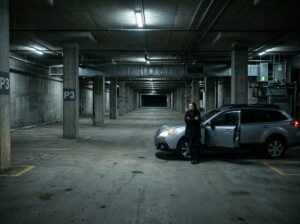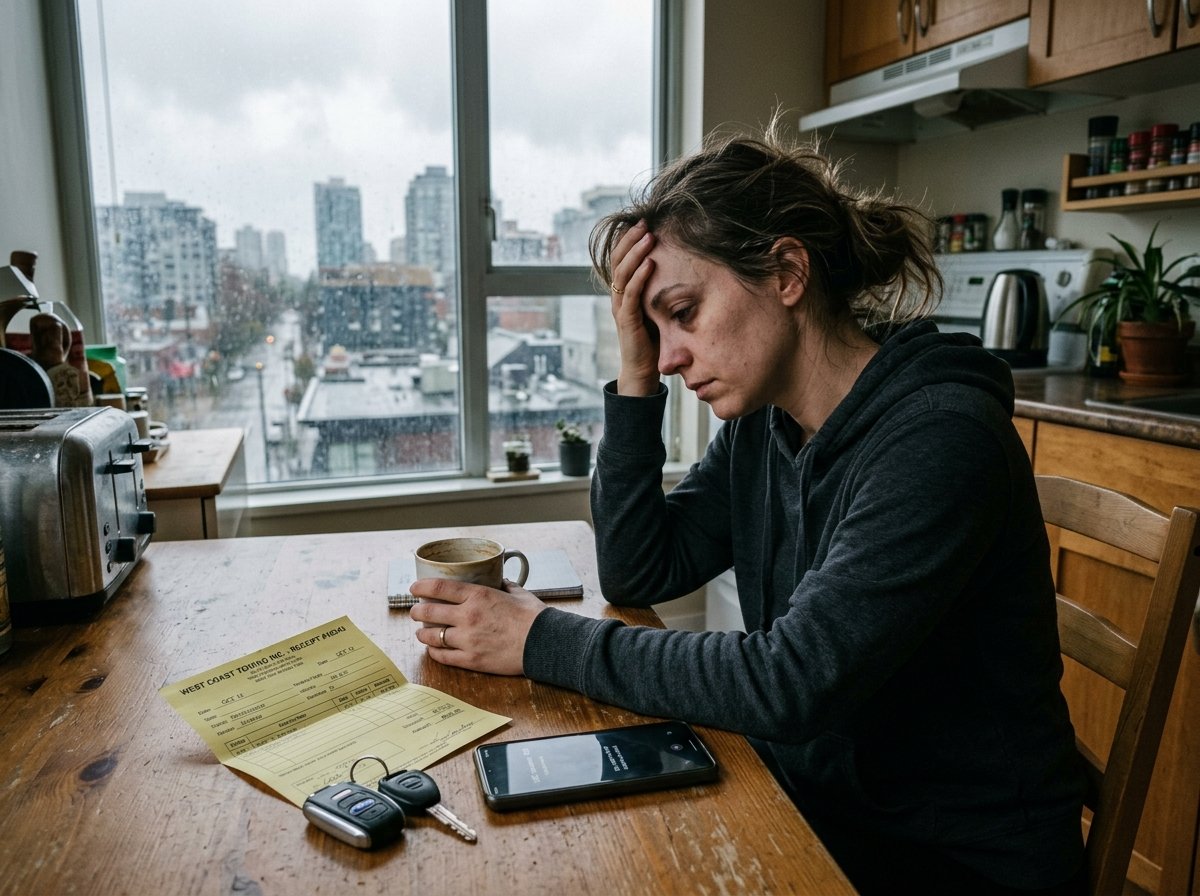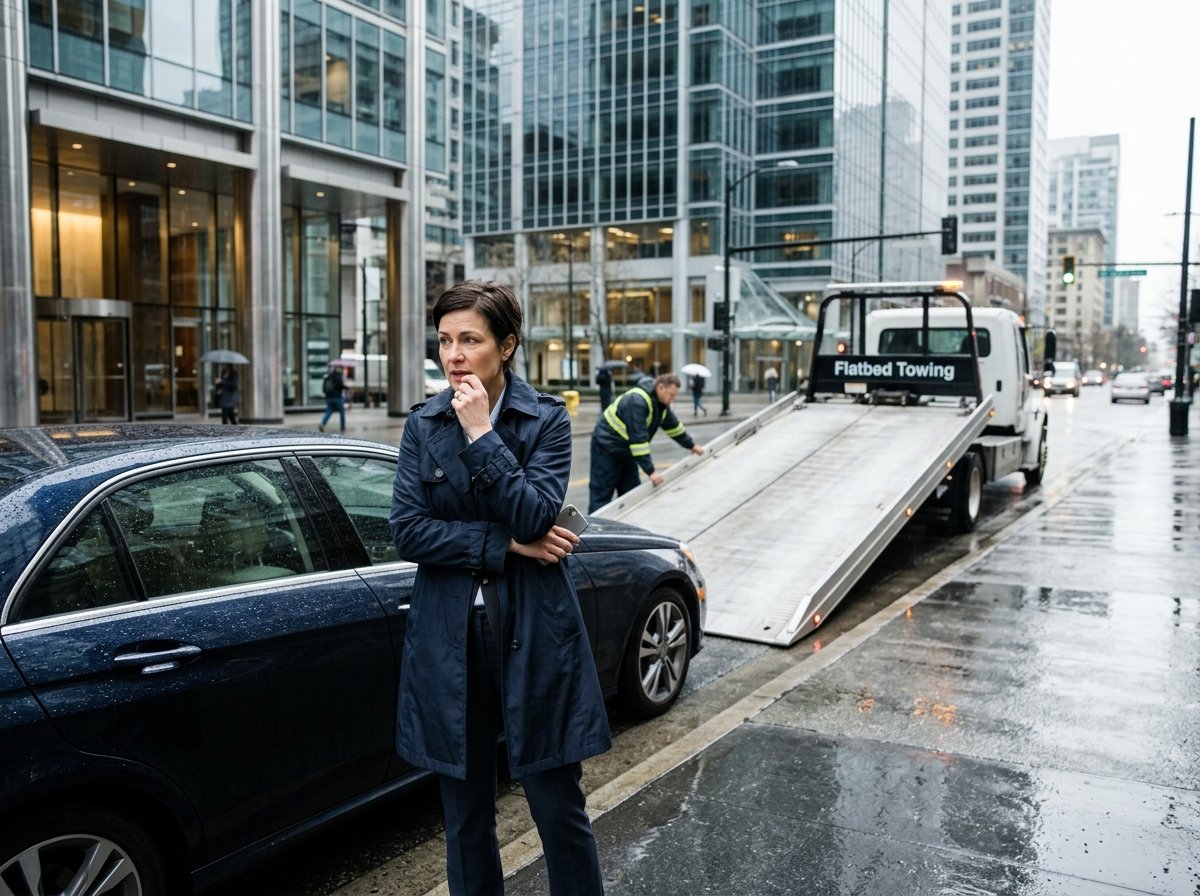
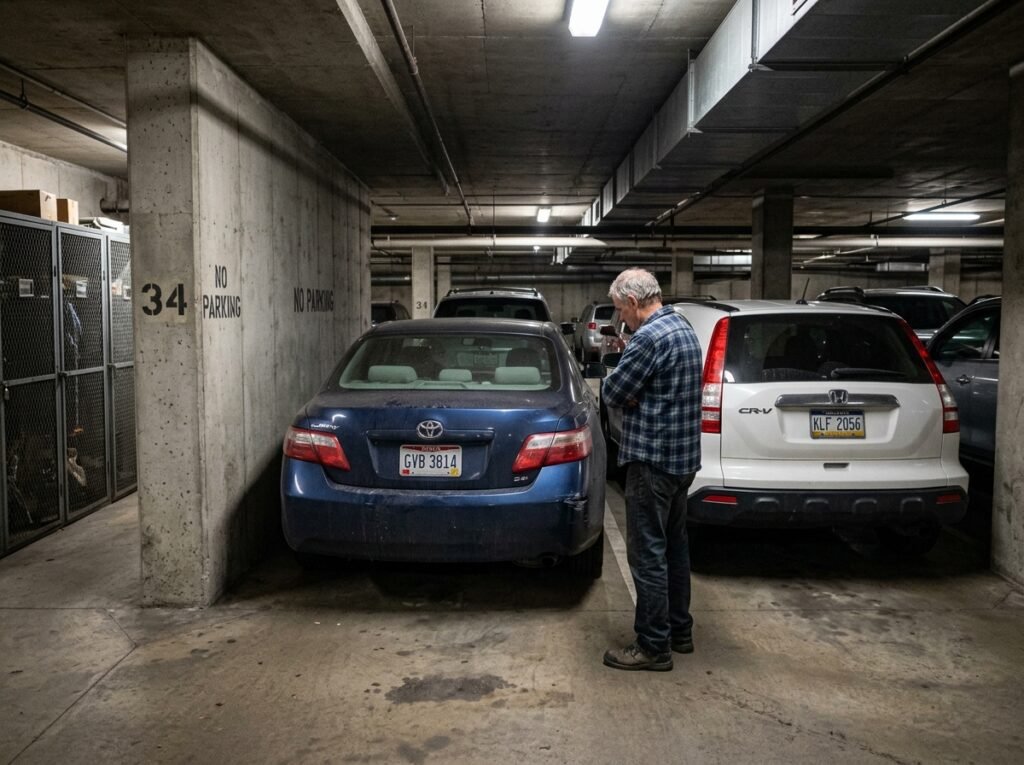
A dead battery, flat tire, or lockout feels worse on level P2. Before booking, tell Expressway Towing the posted height, stall level, entrance street, and ramp shape. A dispatcher can then check whether underground roadside assistance may fit the job or whether another plan is safer.
Quick overview
- The entrance sign may be lower than a normal service truck.
- A sharp ramp can block a long or tall vehicle.
- The car may be parked behind a gate or around a tight turn.
- Building rules may limit where a technician can stop.
In this guide
- Good dispatch starts with exact access details, not a guess.
- The safest answer may be service in place, moving the car, or booking a tow.
Simple version: send these four facts first.
- Posted clearance height.
- Parkade level and stall number.
- Vehicle make, model, and problem.
- Gate, concierge, and loading-zone access.
TLDR: Parkade Access Must Be Confirmed
- Twenty-four-hour service does not mean every truck fits every garage.
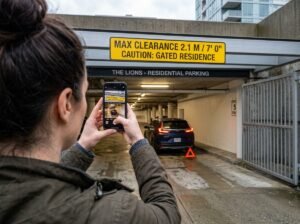
- Send the height sign and entrance photos before dispatch.
- Do not move the car if the tire, steering, or brakes are unsafe.
What “Reach The Parkade” Really Means
The right question is not only whether help is open. It is whether the assigned vehicle and tools can follow the full route to your stall. A 24 hour roadside assistance service may handle many common problems, but clearance, turns, gates, and building rules still need a check.
Context (what matters in this situation):
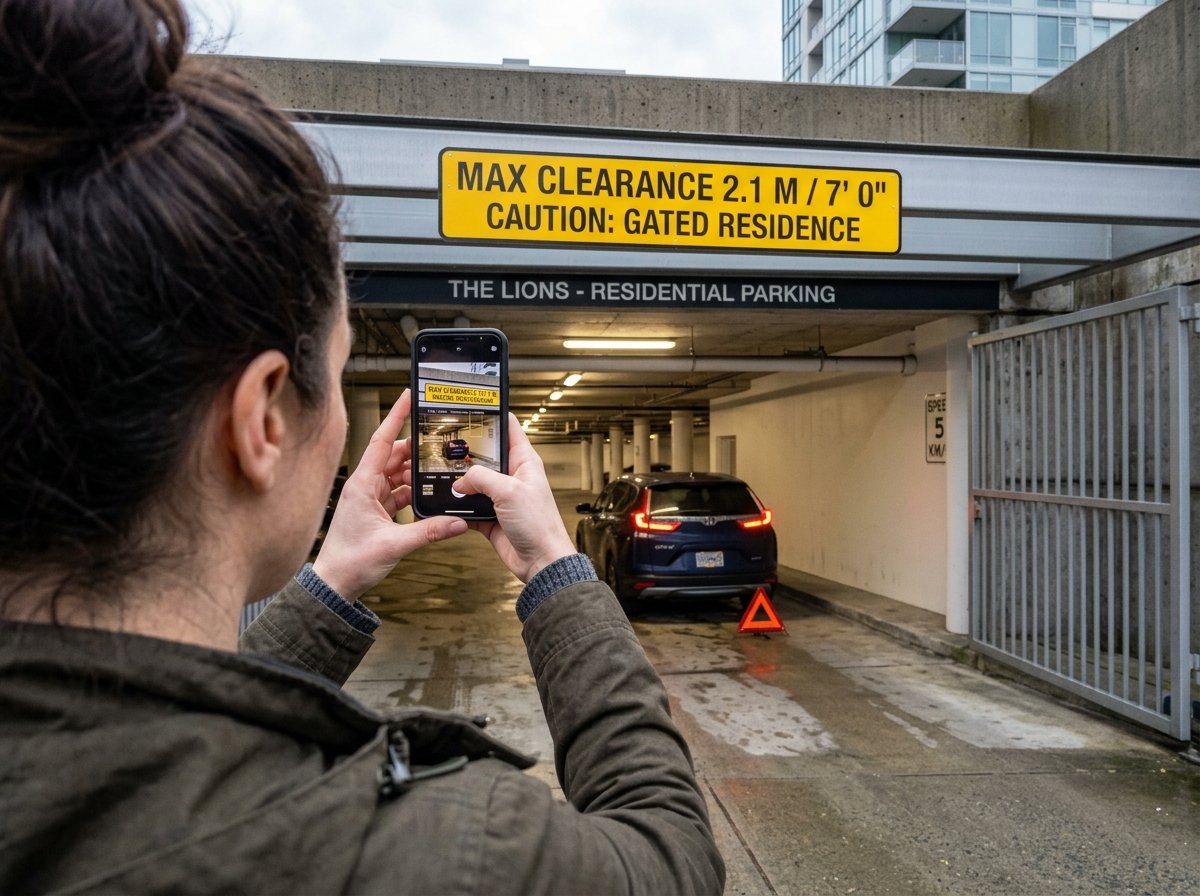
- Entrance height: copy the full number from the sign.
- Route height: look for lower pipes, beams, and sprinklers.
- Turning room: note sharp corners and narrow ramps.
- Work area: check if there is safe space beside the car.
A Fast Yaletown Parkade Booking Story
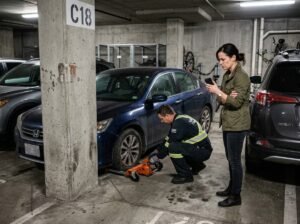
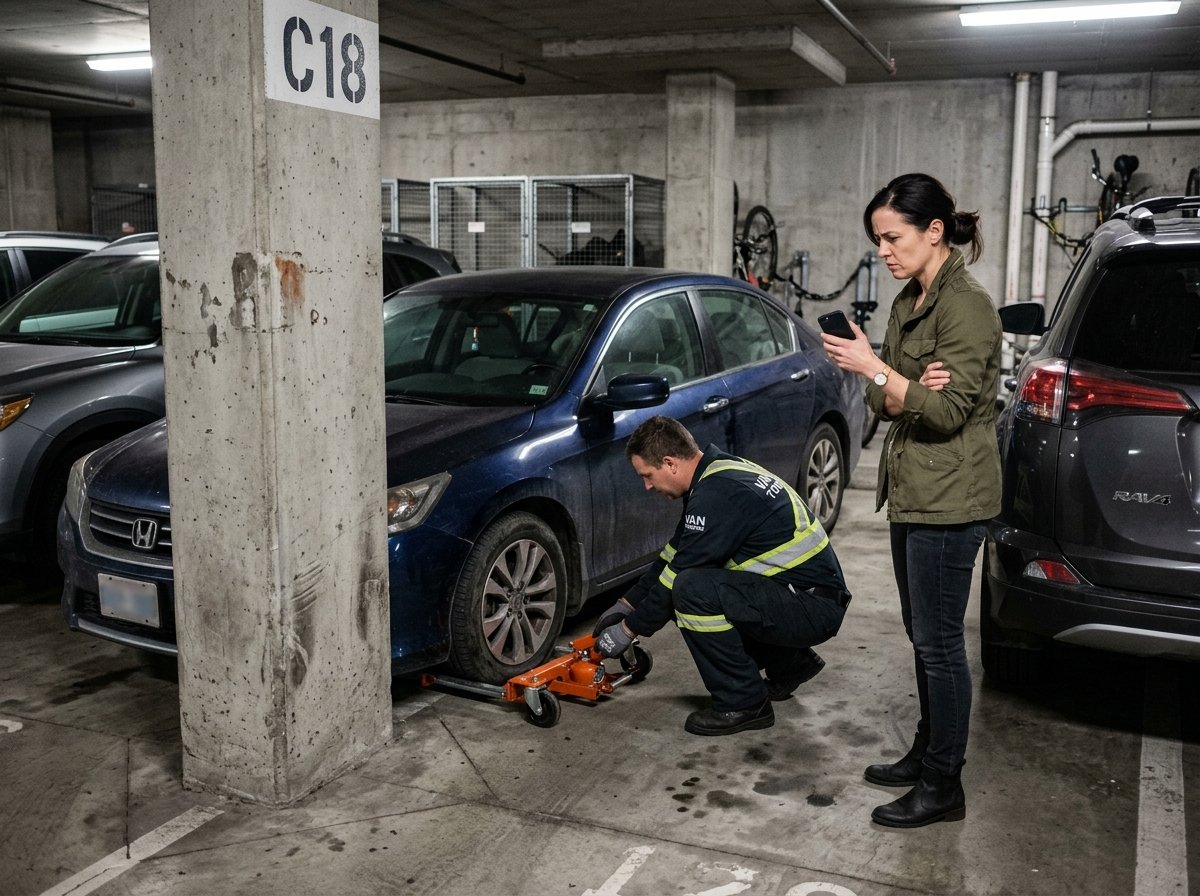
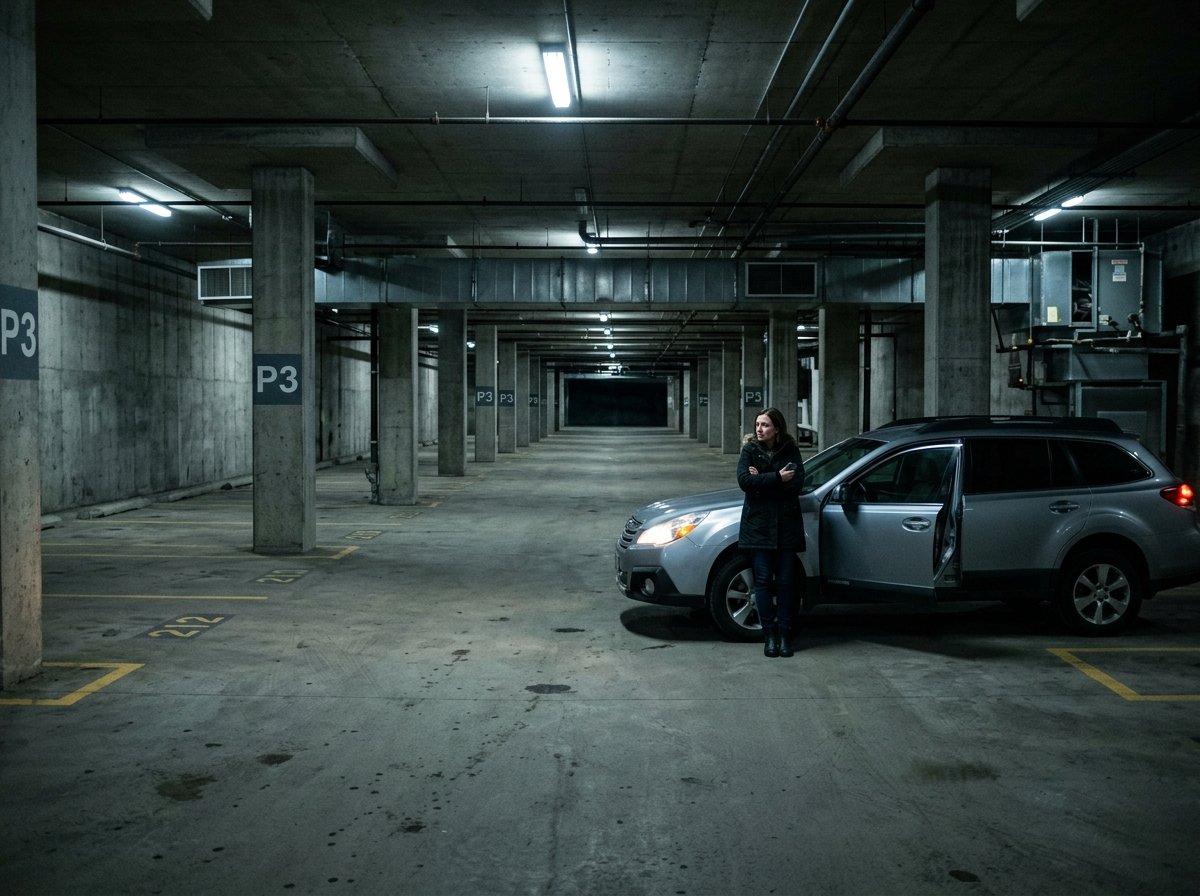
Imagine your front tire is flat on P3. You call for help, but the first useful step is not sending the biggest truck. Dispatch must decide whether mobile tire change service can be done at the stall or near a safer loading area.
What this usually looks like (real-world flow):
- You read the clearance sign at the vehicle entrance.
- You send a photo of the ramp and gate.
- You confirm the tire size and whether a spare is present.
- Building staff explain where service vehicles may stop.
- Dispatch confirms the service plan before travel starts.
Details to confirm (so you get the right help fast):
- Give the nearest street entrance, not only the condo address.
- Say whether your key or fob opens the gate.
- Mention low pipes, speed bumps, and tight corners.
What you should get as the outcome:
- The technician arrives with a clearer plan.
- You reduce delays caused by the wrong access point.
- You know early if the car must be moved or towed.
Membership Limits And Costs To Check
A roadside plan may cover the basic call but not every condition. For example, car battery boost service inside a private parkade may still depend on access, wait time, vehicle type, and the tools needed. Ask what is included before you approve dispatch.
Limits / constraints (what can slow things down):
- Some plans cap the number of calls each year.
- A plan may cover labour but not a new battery or tire.
- Private-property access may need building approval.
- Large vehicles may need different equipment.
Hidden costs to watch for:
- Extra wait time for a locked gate or missing fob.
- A second unit if the first unit cannot enter.
- Parts, fuel, or a replacement battery.
- A tow if roadside repair is not safe.
What To Do Before You Call
First, name the exact problem. A locked car may need car lockout service, while a damaged wheel may need a tow. Clear details help dispatch choose the next step.
- Take photos of the clearance sign, entrance, and vehicle.
- Ask the concierge where a service vehicle can enter and stop.
Our Recommendations Before Dispatch
Read the lowest height sign on the whole route.
Send one wide photo and one close photo of the entrance.
Confirm the stall level and nearest elevator or gate.
Tell dispatch if the car can roll, steer, and brake.
Ask for the total call-out price and possible add-ons.
Get building access ready before the technician arrives.
Five Safety Steps In A Parkade
Keep people away from moving cars and blind ramp corners. If the tire is only low, tire inflation service may be an option, but a split sidewall or bent wheel needs a different plan.
A good option is:
- Turn on hazard lights if the battery still has power.
- Do not stand behind the car on a sloped ramp.
- Use the parking brake and place the car in park.
- Tell building staff if the car blocks traffic.
- Do not drive on a flat tire or leaking wheel.
Scenario 1: Flat Tire Beside A Wall
There may not be enough room to lift the car or remove the wheel. Send a photo showing the wall and wheel gap so dispatch can judge whether tire repair service is practical in the stall.
Do this:
- Do not drive on the flat tire.
- Confirm whether a spare tire is in the car.
- Ask if the car can be safely rolled to a wider area.
Scenario 2: Out Of Fuel On P2
A small fuel amount may get the car to a station, but the building may control fuel handling underground. Ask the concierge and dispatch whether fuel delivery service is allowed at the stall.
We recommend this:
- Turn off the engine and all flames or smoking materials.
- Confirm the fuel type before booking.
- Ask where fuel can be safely transferred.
Scenario 3: Battery Will Not Hold A Charge
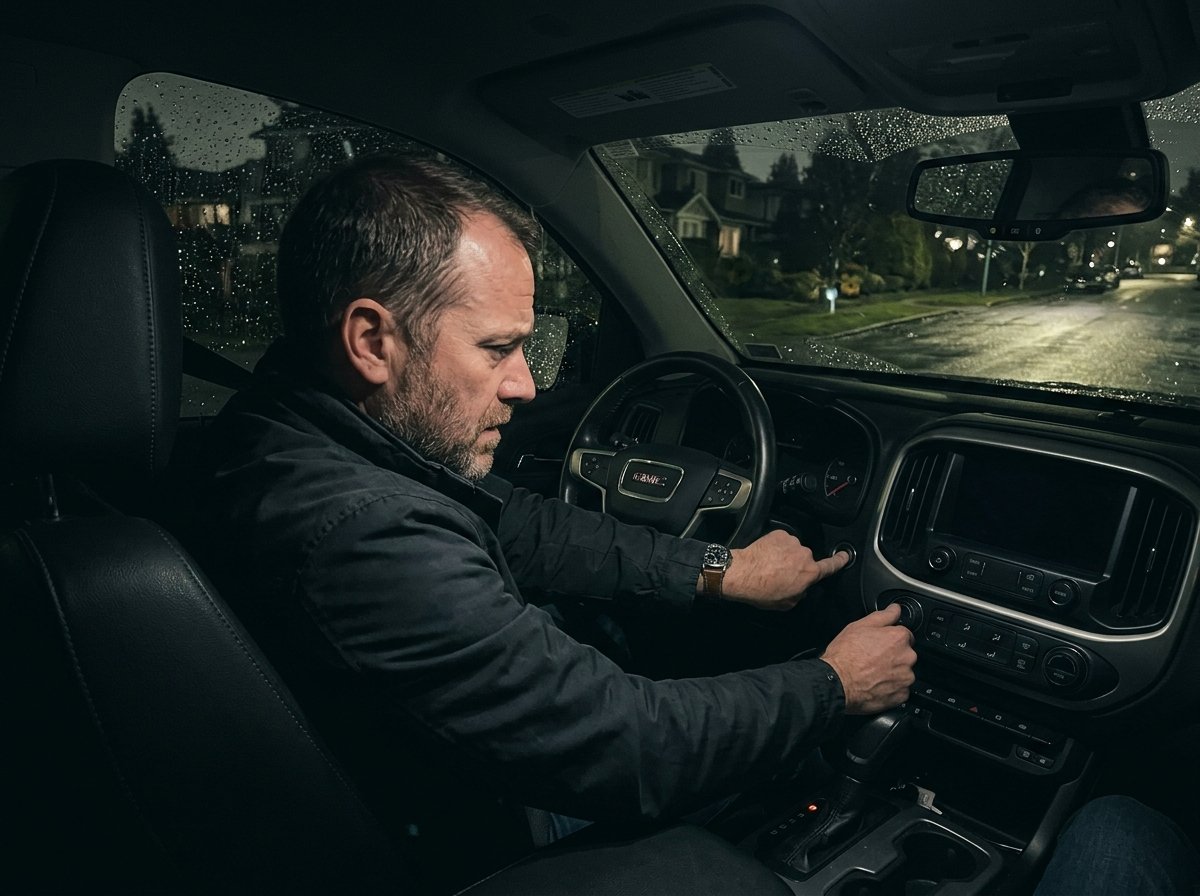
A boost may start the car, but it may not solve a failed battery. Ask whether testing and car battery replacement are possible in the parkade before approving the call.
Here’s a simple path forward:
- Share the battery age if known.
- Say whether the dash lights turn on.
- Confirm the vehicle make, model, and engine size.
Suggested plan:
Step 1: Prepare The Vehicle Details
Write down the make, model, year, problem, and parkade height. If it is a van, truck, or other large vehicle, mention that early because heavy vehicle battery boost service can require different access and equipment.
Step 2: Share The Exact Entrance
Send a map pin for the vehicle entrance, then add the street name, gate code process, level, and stall. A condo mailing address may lead to the lobby instead of the parkade ramp.
Step 3: Choose The Likely Service
Choose the problem, not the tool. This guide to roadside repair or towing can help you explain whether the car needs a boost, tire help, unlock, or tow.
City of Vancouver parking guide
The City of Vancouver parking guide explains meter, time-limit, and street parking basics. Check it if building staff ask you to move the vehicle outside before help arrives. Do not move an unsafe vehicle; confirm a legal stopping place first.
Frequently Asked Questions
Can every roadside truck enter a Yaletown parkade?
No. The answer depends on the posted height, ramp turns, gate width, and the unit being sent. Give dispatch photos and the exact clearance before the booking is confirmed.
What clearance number should I send?
Send the lowest posted number on the full path to the car, not only the first entrance sign. Use this Vancouver booking checklist to gather the other details dispatch may need.
Can a technician walk in with tools?
Sometimes a boost, unlock, or small tire job can be done with portable tools. It still depends on the fault, safe work space, and building rules. Dispatch should confirm the plan first.
How do I know a technician is really assigned?
Ask for the technician status, expected arrival window, and update method. This guide explains the difference between assigned and requested service.
What if the car is stopped on a ramp?
Do not try to push it through traffic. Turn on hazard lights, warn building staff, and keep people away from the downhill side. Tell dispatch that the car is on a slope.
Does 24 hour roadside assistance mean instant arrival?
No. It means service may be available at any hour, but arrival still depends on traffic, current jobs, access, and the right equipment. Ask for a clear arrival window before you book.