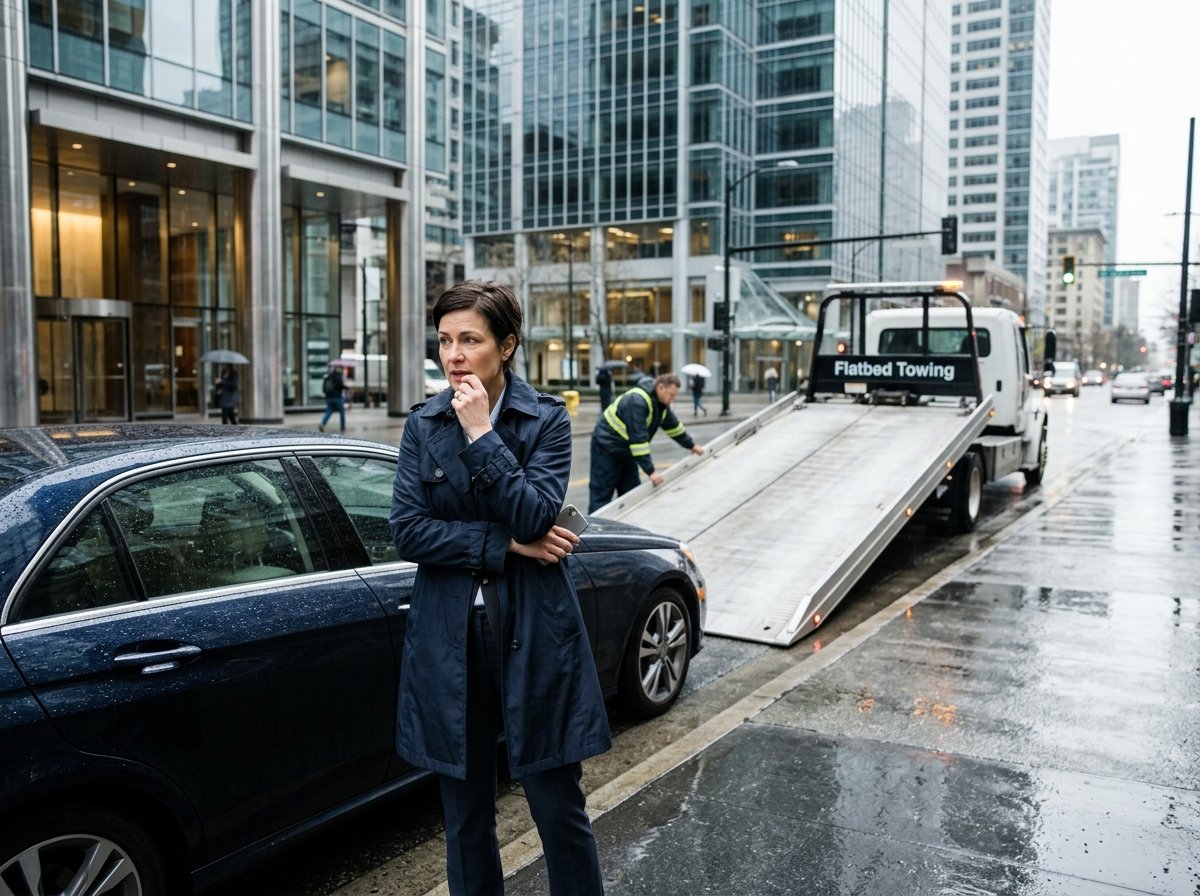
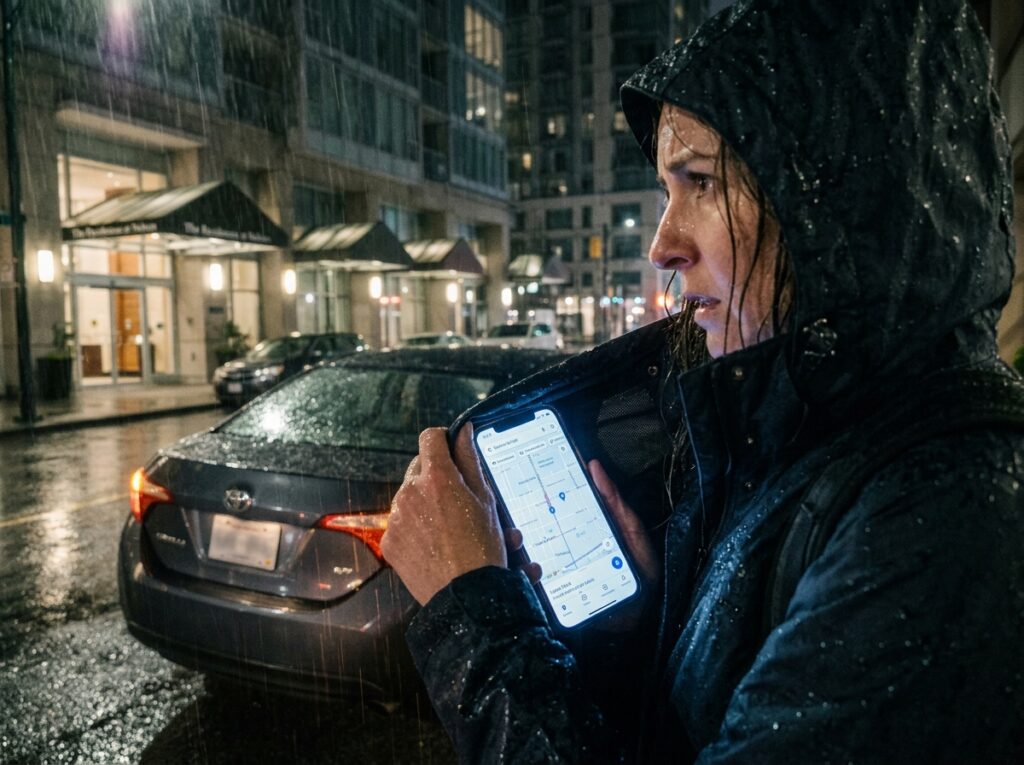
A breakdown can feel worse when you do not know what is booked. Before dispatch, confirm the problem, your exact spot, and access limits for 24 hour roadside assistance in Vancouver. Expressway Towing can then match the request to the right type of help.
Quick overview
- The dispatcher has the wrong pickup point.
- Your service need is not clear.
- A parkade height or gate blocks access.
- The price details are not confirmed.
In this guide
- A clear booking helps reduce delays and repeat calls.
- Written details make it easier to check what was requested.
Simple version: give dispatch these four details before you hang up.
- Exact location and nearest landmark.
- Vehicle year, make, model, and colour.
- What happened and what you already tried.
- Access limits, quote details, and contact method.
TLDR: Confirm These Three Things
- Confirm the exact service, not just roadside help.
- Confirm the full price details and payment method.
- Confirm that a technician is assigned and how updates will arrive.
What 24 Hour Roadside Assistance Means
Roadside help may fix a small problem where the vehicle sits. A tow may be safer when the vehicle cannot move or the repair cannot be done there. Use this roadside repair or tow guide to describe the result you need.
Context (what matters in this situation):
- Battery boost: the engine does not start.
- Tire help: the tire is flat, soft, or damaged.
- Lockout help: the keys are inside or missing.
- Fuel delivery: the vehicle ran out of fuel.
The Booking Call From Start to Finish
Ask whether the job is only requested or a worker is assigned. This technician assignment guide explains why that wording matters before you rely on an arrival update.
What this usually looks like (real-world flow):
- You give the pickup address, direction of travel, and landmark.
- You explain the vehicle problem in plain words.
- Dispatch checks vehicle size, access, and safety needs.
- You confirm the quote details and payment method.
- You ask for the job status and update method.
Details to confirm (so you get the right help fast):
- Spell the street name and unit or stall number.
- Share the licence plate only when it is safe to do so.
- Ask whether photos or a map pin would help.
What you should get as the outcome:
- The right worker is sent with the right tools.
- Access problems are known before arrival.
- You know what update to expect next.
Check Coverage Limits and Extra Costs
Roadside plans and direct-pay calls can have different limits. A large van or truck may also need heavy vehicle battery boost service instead of a standard car service. Ask what is included before you approve dispatch.
Limits / constraints (what can slow things down):
- Number of covered calls per year.
- Maximum service or towing distance.
- Vehicle size or weight limits.
- Rules for rental, work, or commercial vehicles.
Hidden costs to watch for:
- After-hours or holiday charges.
- Parkade, stairs, gate, or difficult-access charges.
- Parts, fuel, battery, or tire costs.
- Waiting time, cancellation, or extra-distance charges.
What to Do Before Dispatch
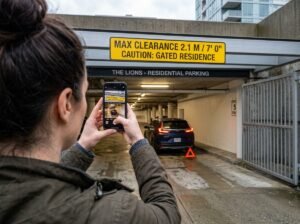
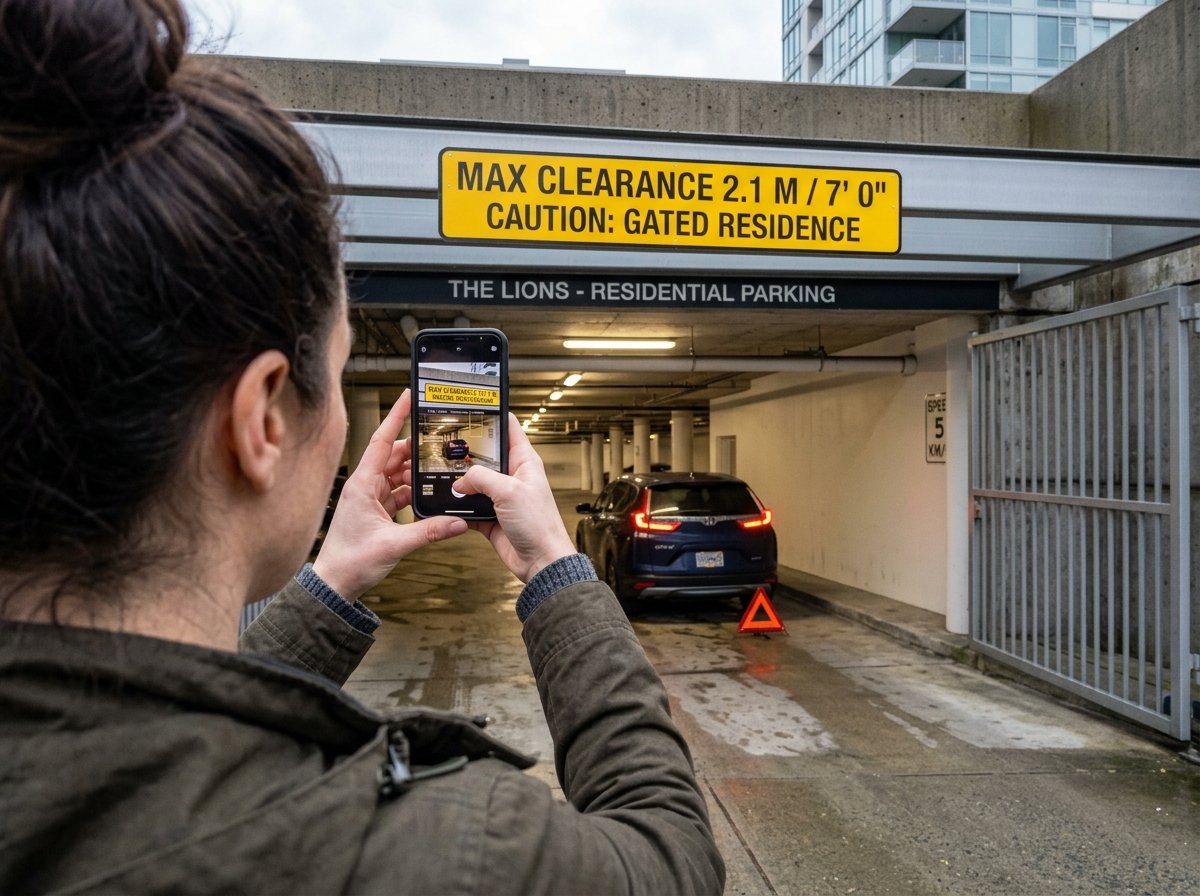
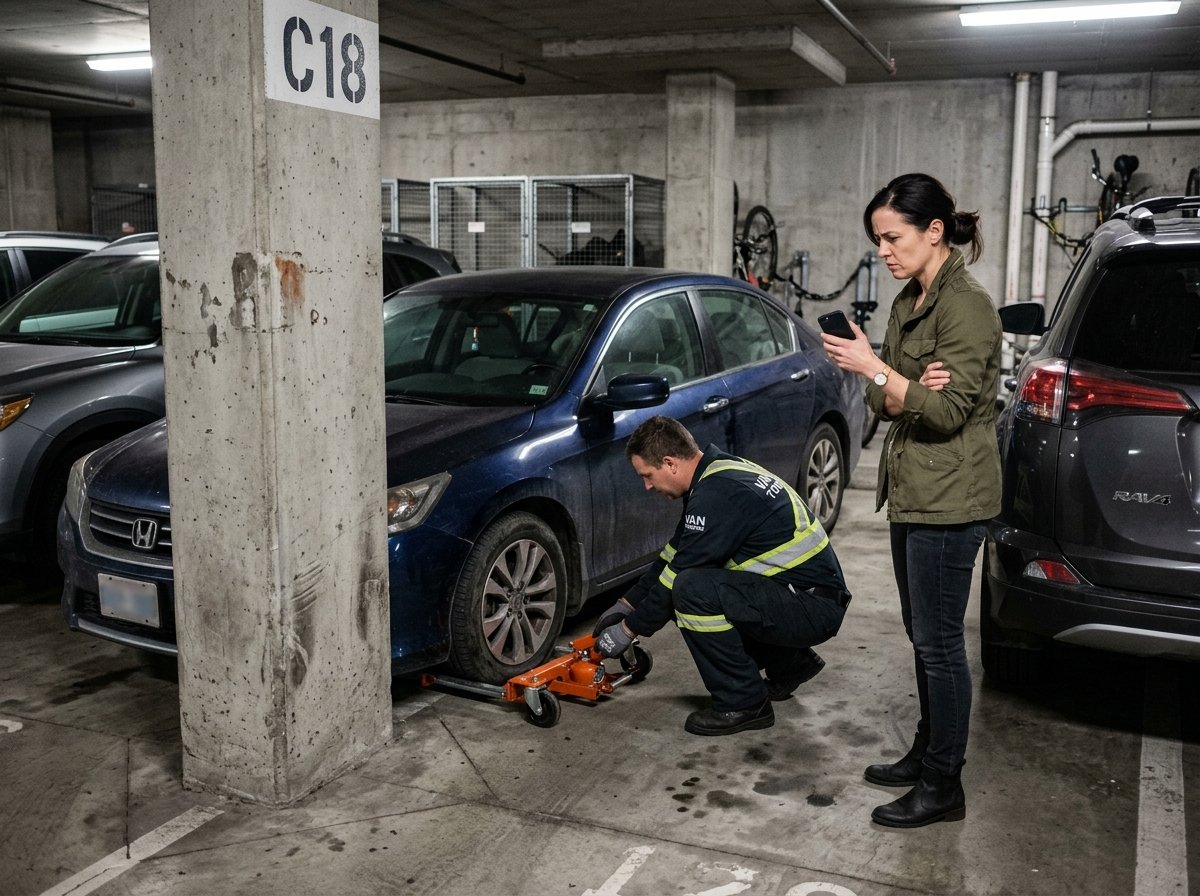
Pause for one minute before you approve the job. If you are below ground, check the height sign, gate steps, stall number, and exit route. This low-clearance parkade guide can help you explain the access problem.
- Ask dispatch to repeat your location and service request.
- Save the job details and keep your phone on.
Our Recommendations for Vancouver mobile tire help
Take one wide photo of the vehicle and safe access path.
Keep the wheel lock key and spare tire easy to reach.
Ask for a text update when calls may be hard to hear.
Do not guess the parkade height or vehicle weight.
Ask which costs can change after the worker arrives.
Move to a safe place without leaving the vehicle at risk.
Five Safety Steps While You Wait
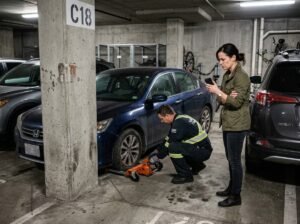
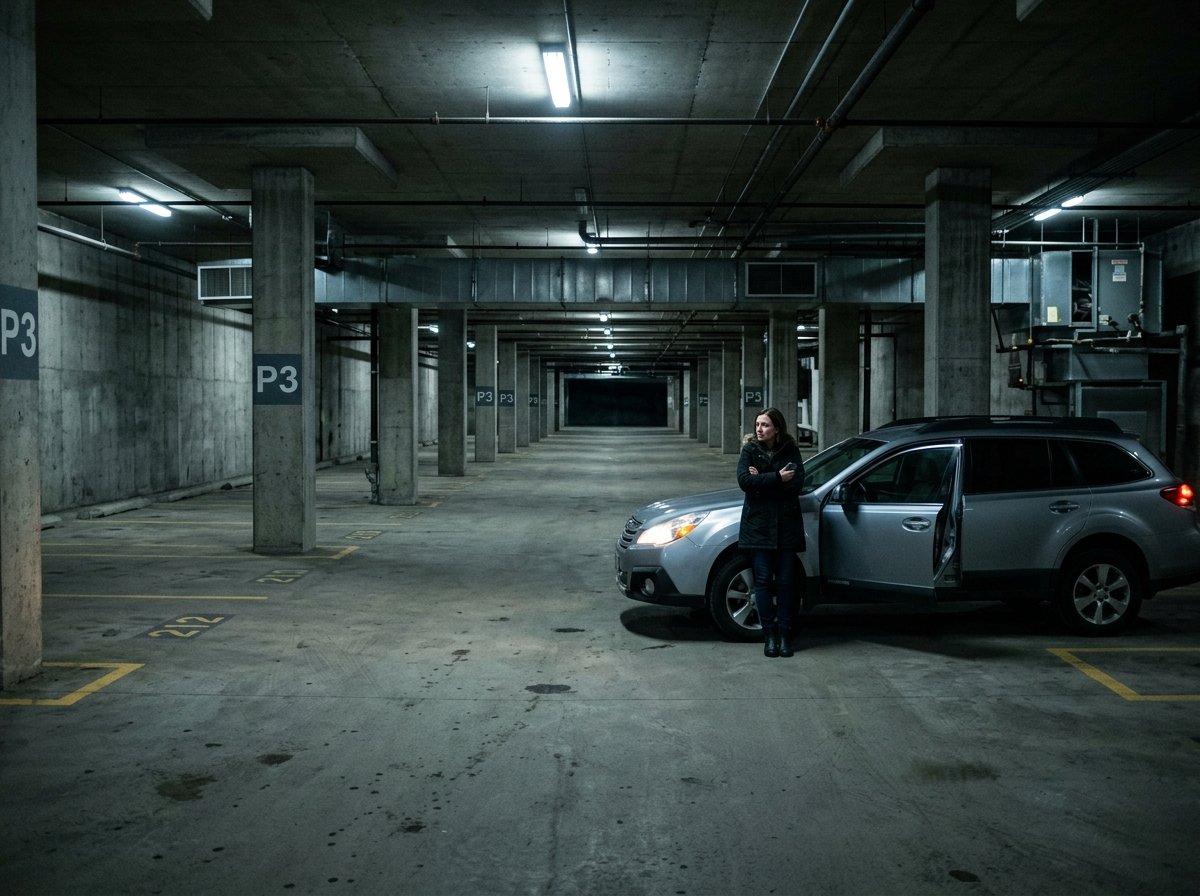
Your safety comes before the repair. For a basement or condo stall, tell dispatch that you may need underground roadside assistance and follow building rules while you wait.
A good option is:
- Turn on hazard lights when it is safe and useful.
- Stay away from moving traffic and blind corners.
- Do not stand between vehicles or behind a rolling vehicle.
- Keep children and pets in a safe place.
- Call 911 for fire, injury, danger, or a traffic emergency.
Scenario 1: The Car Will Not Start
Tell dispatch whether the lights work, whether you hear clicking, and whether the battery is easy to reach. A car battery boost in Vancouver may help when the battery is weak, but it will not fix every no-start problem.
Do this:
- Do not keep trying the starter for a long time.
- Mention battery leaks, heat, smell, or swelling.
- Ask what happens if the boost does not work.
Scenario 2: The Tire Is Flat or Damaged
Describe the tire, road surface, and spare tire before booking. A Vancouver tire repair service may be possible for some tread punctures, while sidewall damage or a missing spare may need another plan.
We recommend this:
- Share the tire size from the sidewall when safe.
- Say whether a wheel lock key is available.
- Do not drive on a flat tire unless safety requires movement.
Scenario 3: The Keys Are Locked Inside
Confirm the make, model, year, and where the keys can be seen. A car lockout service in Vancouver may need different tools for newer locks, frameless windows, or keys left in the trunk.
Here’s a simple path forward:
- Check every door and the trunk once.
- Mention a child, pet, heat, or medical risk at once.
- Have proof that you may access the vehicle.
Suggested plan:
Step 1: Name the Exact Problem
Say what stopped the trip and what you need now. For an empty tank, give the fuel type and ask about fuel delivery in Vancouver before a tow is arranged.
Step 2: Share the Exact Location
Send a map pin when possible, then add the street, direction, level, stall, gate code process, and nearest landmark. Tell dispatch where a service vehicle can safely stop.
Step 3: Confirm the Service and Backup Plan
Ask what the worker will try first and what happens if it does not solve the problem. A weak battery may need car battery replacement in Vancouver instead of another boost.
B.C. driving emergency guidance
The Province of British Columbia explains what to do during a driving emergency. Read the B.C. emergency driving guidance before a trip so you know when roadside help is enough and when to call emergency services. It also helps you plan safer steps while waiting. Keep the advice saved on your phone.
Frequently Asked Questions
What details should I give before dispatch?
Give the exact location, vehicle details, problem, access limits, and a phone number that works. Also say whether the vehicle is in traffic, underground, or in a private lot. Ask dispatch to repeat the request back to you.
Can dispatch promise an exact arrival time?
Ask for the current estimate and what could change it. Traffic, weather, access, and a prior emergency can affect timing. Confirm whether a worker is assigned and how you will get updates.
What if the tire is only low?
Do not assume a low tire only needs air. Ask whether tire air-up service in Vancouver is suitable and check for a nail, sidewall damage, or a leaking valve. Stop driving if the tire looks unsafe.
Should I move the vehicle before help arrives?
Move it only when you can do so safely and without causing more damage. If the vehicle is blocking traffic or in danger, call emergency services as needed. Tell dispatch before you change locations.
What price questions should I ask?
Ask for the call-out charge, labour, parts, tax, after-hours fees, access fees, and cancellation rules. Ask which amount is fixed and which amount may change. Get the details in writing when possible.
What should I do after the booking is made?
Save the job number, worker status, contact method, and quoted details. Keep the phone charged and watch for a call or text. Update dispatch if your location or safety changes.