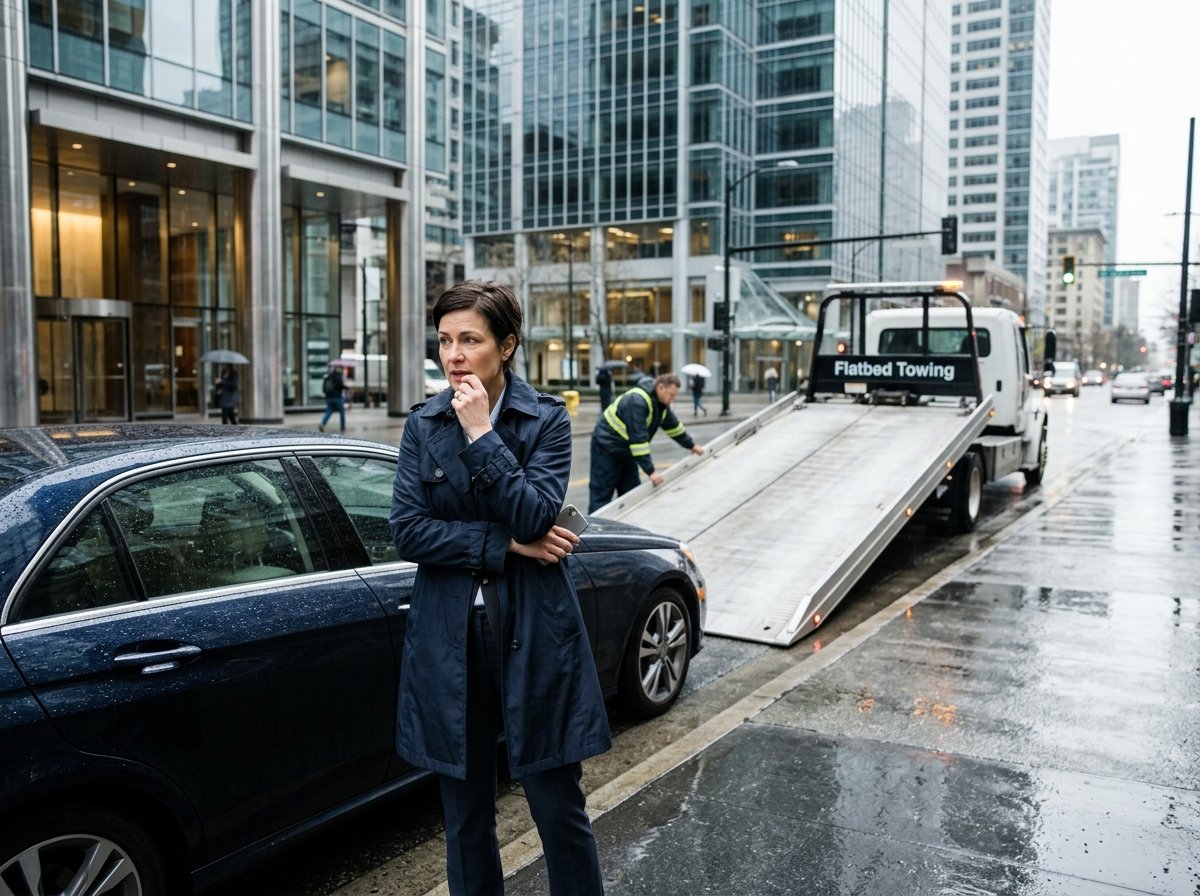
Stuck with locked wheels, AWD, a parkade, or a tight lane? Ask dispatch what gear will arrive before you book. A flatbed tow truck can help when all wheels should stay off the road, while dolly towing may help when two wheels cannot roll. Expressway Towing can confirm the setup before the driver heads out.
Quick overview
- You are not sure if your car can roll.
- The car is AWD, lowered, or locked in park.
- The pickup spot is tight or underground.
- You worry the wrong truck will delay the tow.
In this guide
- Ask for the truck type before you approve dispatch.
- Share photos so dispatch can spot clearance issues early.
Simple version: tell dispatch what moves, what does not move, and where the car is parked.
- Say if the wheels are locked.
- Say if the car is AWD or electric.
- Say if there is low clearance.
- Ask for the final quote before the truck leaves.
Quick answer
- Use a flatbed when the car should not roll on the road.
- Ask for dollies when some wheels are locked or damaged.
- Send photos of the car, slope, and space around it.
What dollies and flatbeds mean
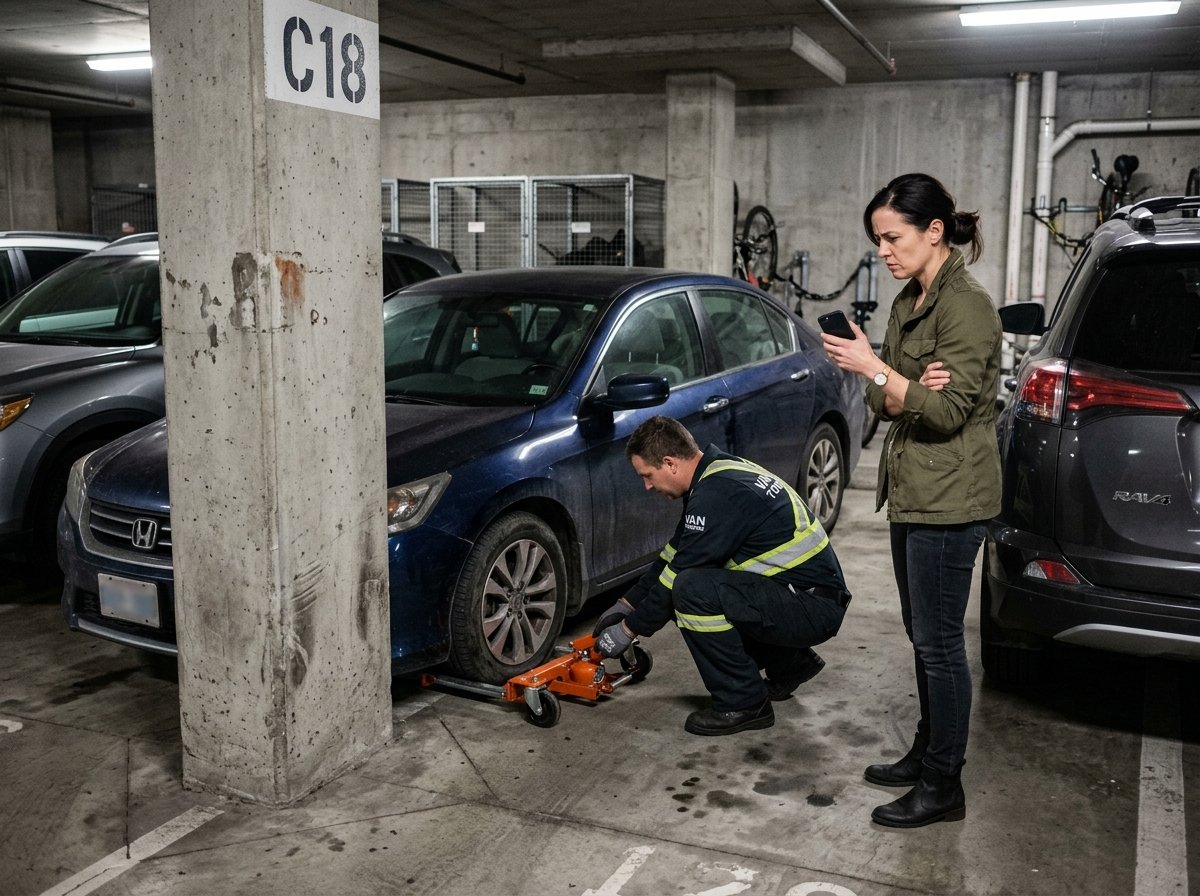
A basic tow is not always the right fit. Light duty towing may be enough when the car rolls and the pickup is simple. If the vehicle is in a parkade, underground towing needs height, ramp, and turning details first. The best call is the one that matches the car and the site.
Context (what matters in this situation):
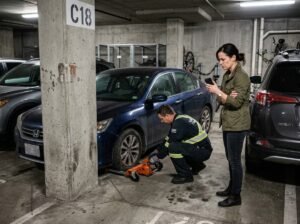
- Dollies help move a vehicle when two wheels need to stay off the ground.
- A flatbed loads the full vehicle onto the truck bed.
- A wheel-lift may work for simple front-wheel or rear-wheel vehicles.
- Low clearance, AWD, electric cars, and locked wheels can change the plan.
What dispatch should ask before sending the truck
Good dispatch starts with simple questions. If you need motorcycle towing, the tie-down plan matters. If you need Tesla towing, the driver needs to know the model, tire condition, and access before arrival.
What this usually looks like (real-world flow):
- You call from the roadside or a parking level.
- Dispatch asks if the car starts, steers, and rolls.
- You describe the curb, ramp, gate, or low ceiling.
- Dispatch chooses a flatbed, dollies, wheel-lift, or a smaller setup.
- You get a clearer quote and fewer surprises.
Details to confirm (so you get the right help fast):
- Send one photo of each wheel if safe.
- Tell dispatch if keys are missing.
- Name the closest cross street or building entrance.
What you should get as the outcome:
- The truck arrives with the right gear.
- The driver spends less time guessing.
- The quote is easier to explain.
Membership limits, fees, and review checks
Before you use a motor club or book the lowest quote, check what is included. Our Vancouver tow quote details guide helps you ask about dollies, flatbed needs, and distance. The Vancouver towing company checklist also helps you confirm driver details before dispatch.
Limits / constraints (what can slow things down):
- Some memberships may limit distance.
- Some plans may not cover dollies.
- Some plans may not cover underground access.
- Some plans may send the next open truck, not the best truck.
Hidden costs to watch for:
- Extra distance after the first limit.
- Special equipment for locked or damaged wheels.
- Low clearance or tight access time.
- Storage or wait time if the drop-off is closed.
What to do before you book
Do not guess and hope the driver can fix it on site. The guide on how to avoid the wrong tow truck explains why truck fit matters. Bigger vehicles may need heavy duty towing, not a standard flatbed.
- Ask: can this truck bring dollies or a flatbed?
- Ask: will this quote change if the car cannot roll?
Our recommendations for the right tow truck
Start with the wheel issue, not the destination.
Say if the car is AWD, electric, lowered, or locked.
Ask if a flatbed is available before you agree.
Ask if dollies are needed for stuck wheels.
Send photos of ramps, gates, and tight corners.
Keep the quote text or booking notes.
Safety steps before the truck arrives
If the vehicle is large or attached to gear, say that right away. Trailer towing and RV towing need more room than a car tow. Stay clear of traffic and wait somewhere safe.
A good option is:
- Move people away from traffic first.
- Turn on hazard lights if the car still has power.
- Do not crawl under the vehicle.
- Do not try to force a locked wheel.
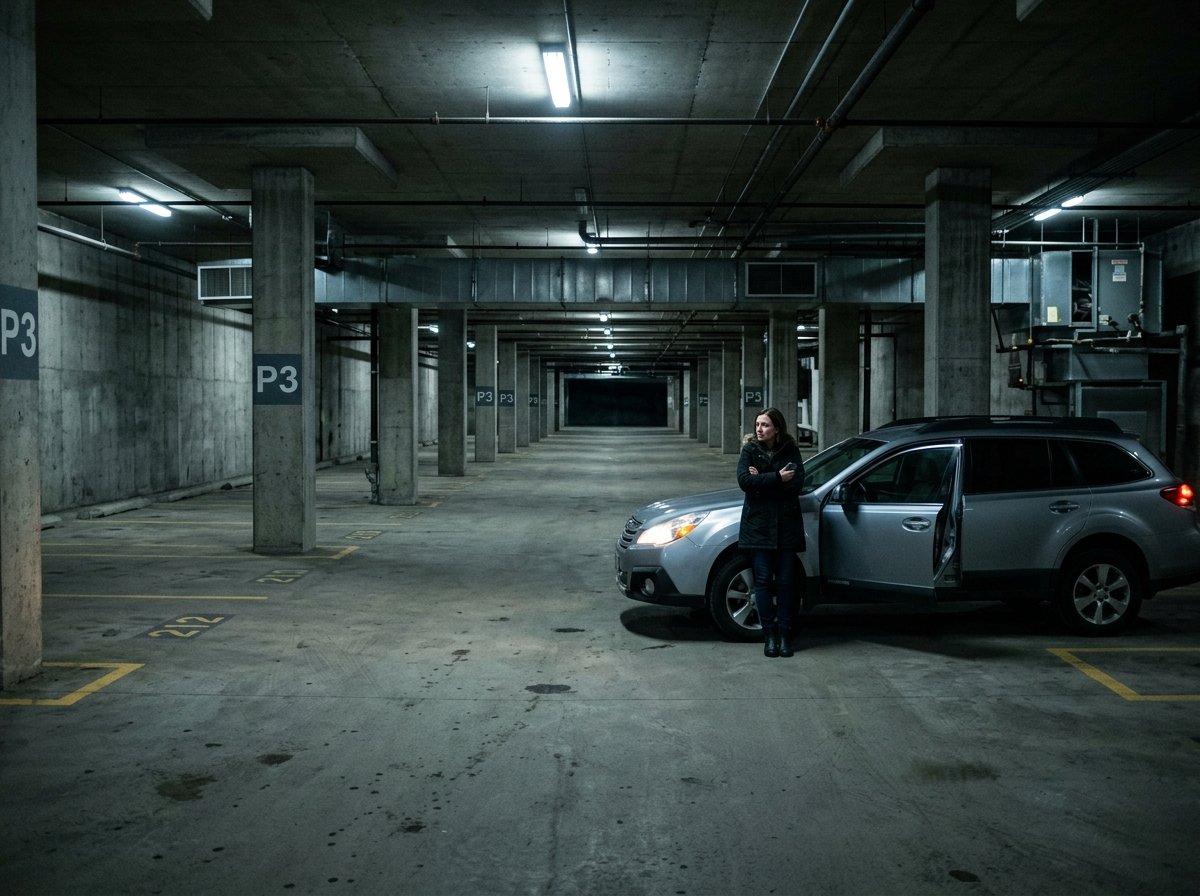
- Meet the driver in a safe, lit place when possible.
Scenario 1: Locked wheels in a lane
If the car will not roll, tell dispatch before the truck leaves. If the drop-off is outside the city, long distance hauling may change the setup and price. A flatbed or dollies can help prevent more damage when wheels are stuck.
Do this:
- Say which wheels are locked.
- Say if the steering works.
- Ask if dollies are included.
Scenario 2: Low parkade or tight condo access
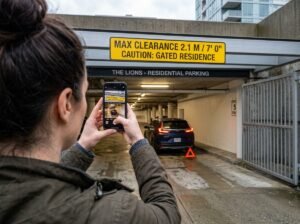
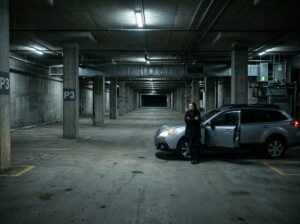
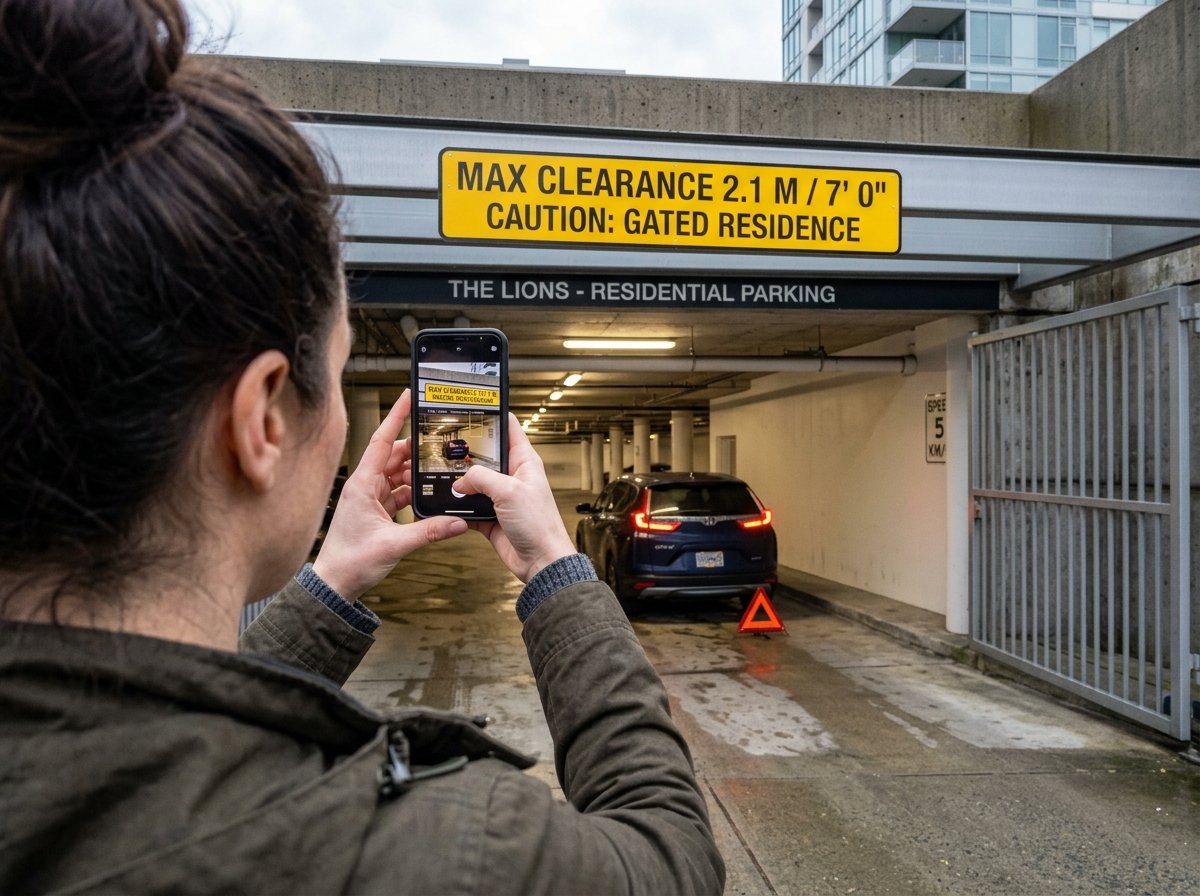
Parkades can block tall trucks. If your vehicle is larger than a car, truck towing may need a different plan. Share the clearance sign, stall number, and exit ramp details.
We recommend this:
- Check the height sign before calling.
- Send a photo of the ramp.
- Tell dispatch if the car is nose-in.
Scenario 3: Boat, trailer, or extra load
If the vehicle is connected to a load, ask before anyone hooks up. Boat towing needs the trailer, hitch, and space checked. A regular car tow may not be the right setup.
Here’s a simple path forward:
- Send a photo of the hitch.
- Say if the load is loose.
- Confirm the destination can accept the load.
Suggested plan:
Step 1: Book with the problem first
Start by saying what happened to the wheels, not just where the car is. This helps dispatch choose gear, access, and timing before the job is locked in.
Step 2: Share your exact pickup spot
Send the pin, closest entrance, level, stall, and photos. Add the clearance sign if the vehicle is in a parkade. Good location notes help the driver bring the right setup.
Step 3: Pick the likely service
Choose the service that sounds closest. Dispatch can still adjust after seeing the photos. The goal is to avoid sending a truck that cannot do the job.
City impound fee guide
Use this City of Vancouver resource when the tow is linked to street parking, a city impound, or a release fee. The city impound and towing fee page shows where to check for a towed vehicle and what fee items may apply. It helps you separate a private tow quote from an impound fee. Keep the page handy if you are not sure why the car was moved.
FAQs about dollies, flatbeds, and Vancouver towing
Do I need dollies or a flatbed?
You may need them if wheels are locked, damaged, or should not roll. For electric or AWD vehicles, a flatbed is often the safer question to ask first. Ask dispatch to match the truck to the car before booking.
Can a tow truck bring both dollies and a flatbed?
Sometimes, but do not assume. Ask if the exact truck assigned has the gear needed. Truck type can change based on access, weight, and wheel condition.
Will a flatbed fit in an underground parkade?
Not always. Height, ramp angle, and turning space matter. Send a photo of the clearance sign and ask if a lower setup is needed.
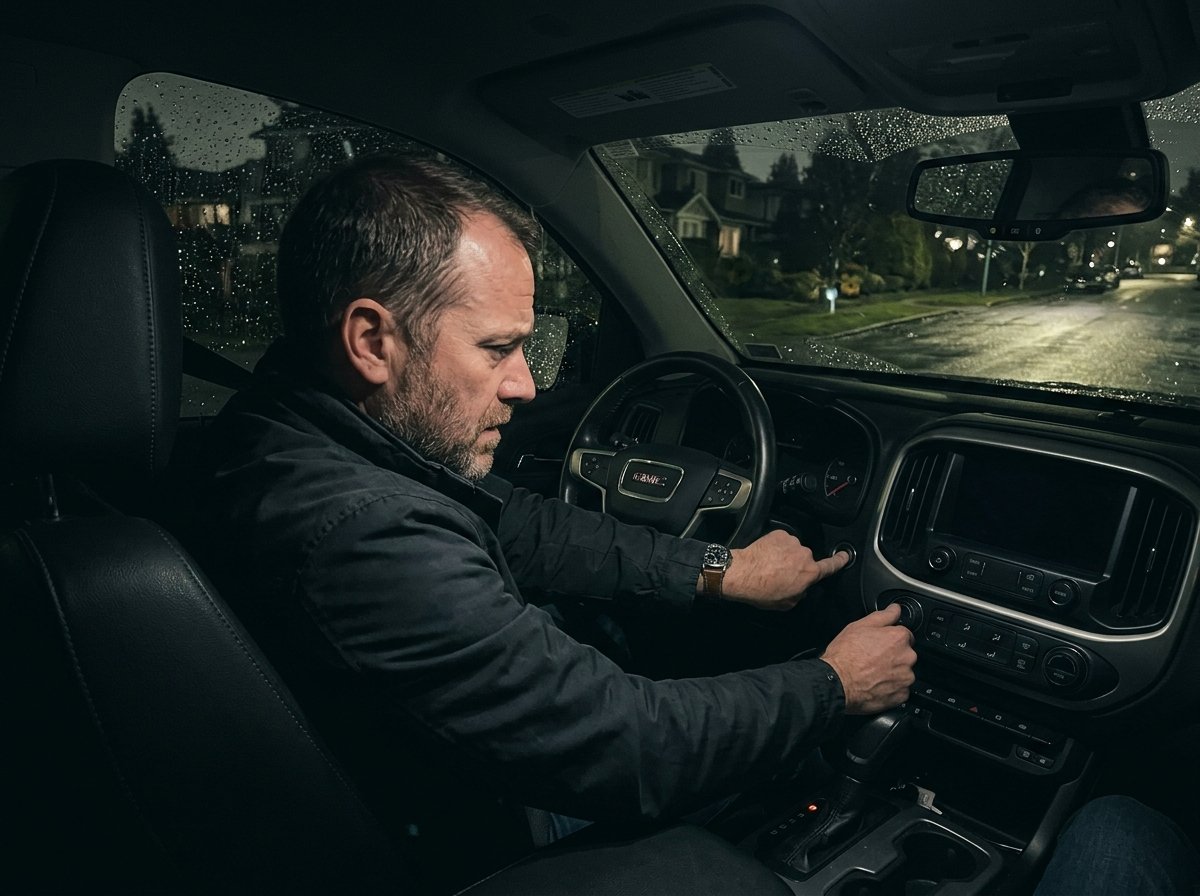
What should I tell dispatch if my car is stuck in park?
Say the car is stuck in park and which wheels can move. Tell them if keys are present and if the steering unlocks. This helps dispatch choose dollies, skates, or a flatbed.
Will dollies cost extra?
They can, depending on the job and quote. Ask before dispatch if dollies, wait time, or access time are included. Get the answer in text when possible.
Can I cancel if the wrong truck is assigned?
Ask about cancellation before you book. Some companies charge once a driver is dispatched. Confirm the truck type, ETA, and fee rules first.