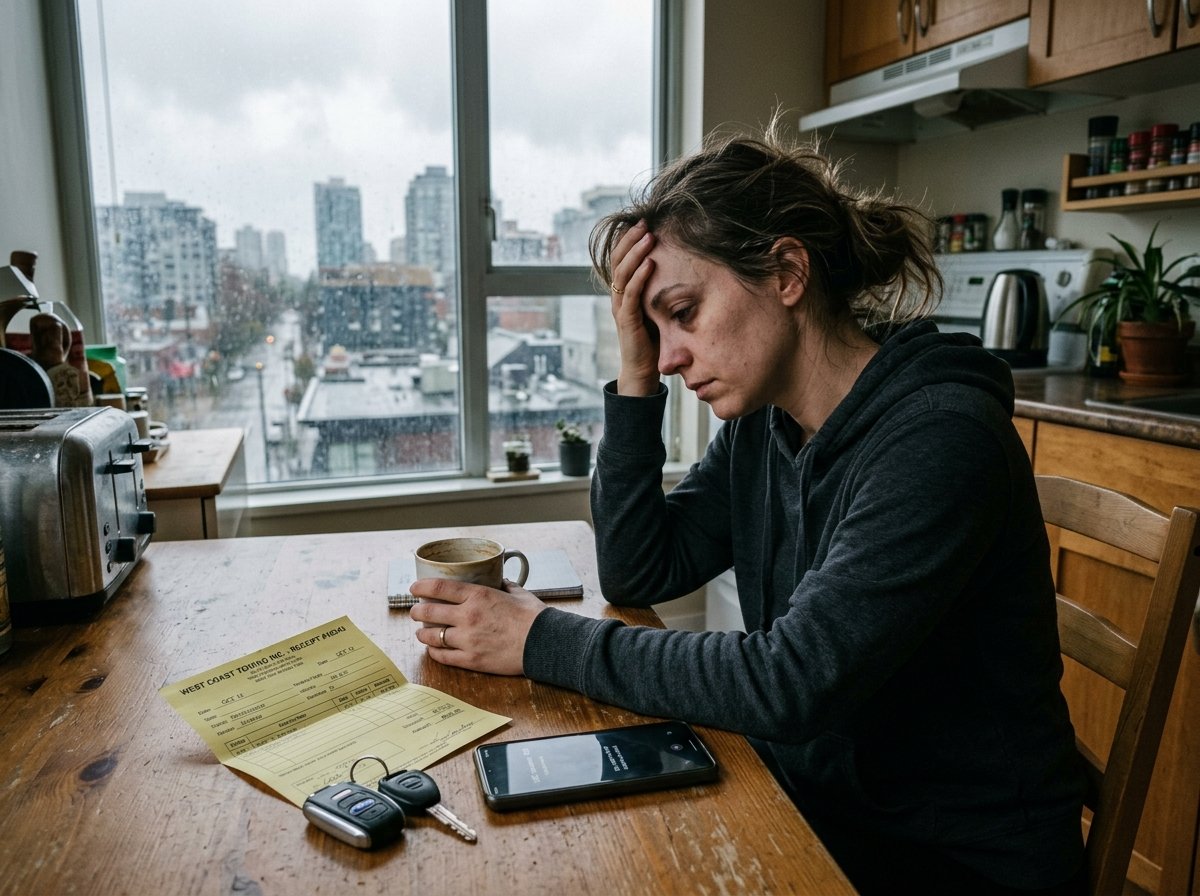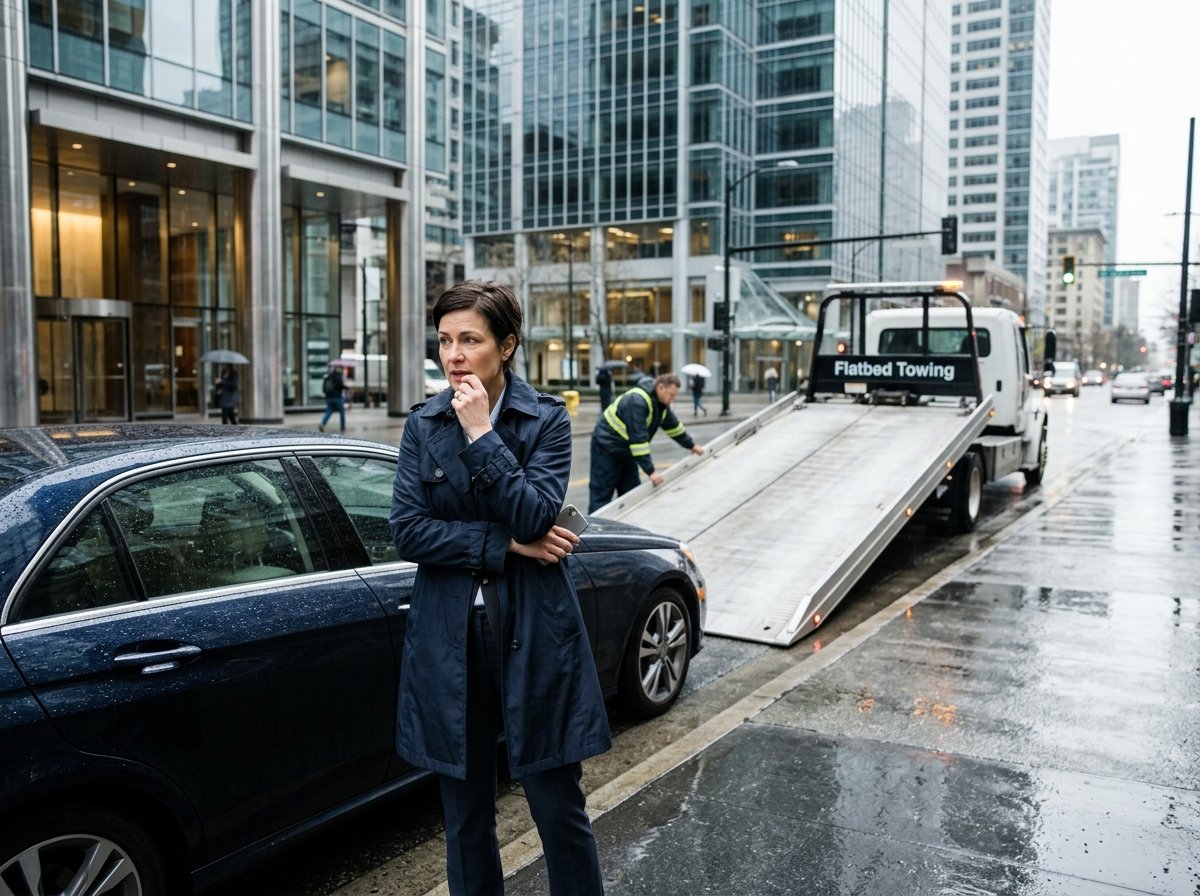
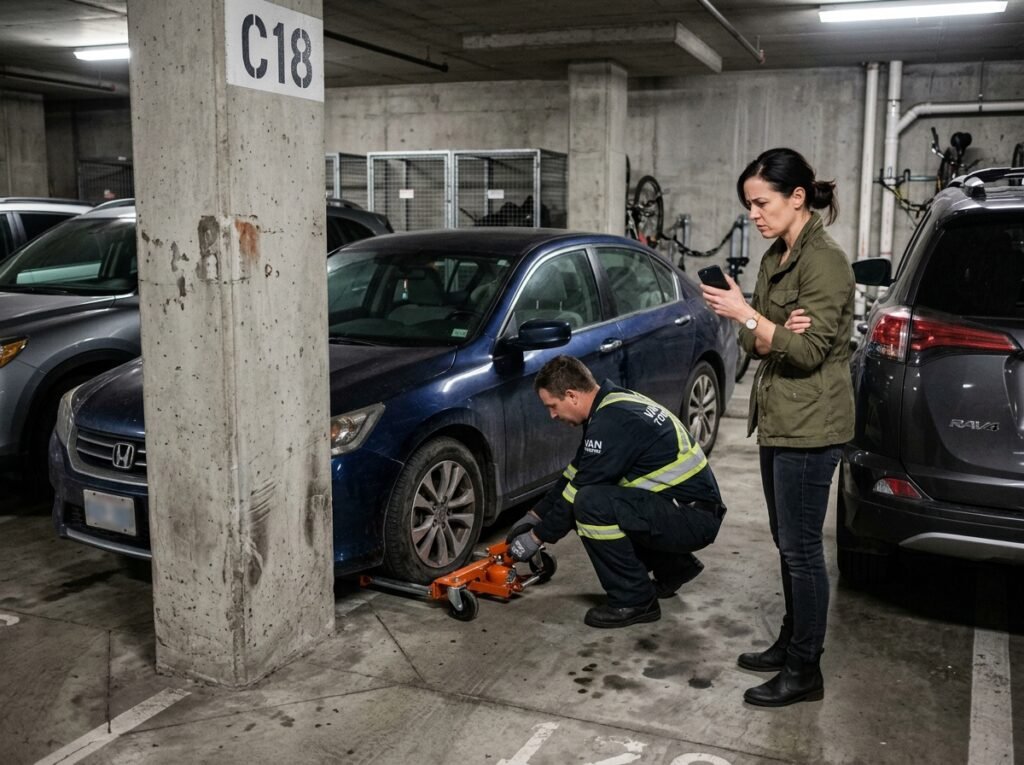
A car stuck below street level can turn a normal tow into a tight-access job. Before dispatch, ask how underground towing in Vancouver will be priced and what equipment the driver expects to use.
Quick overview
- The parkade ceiling may be too low for a standard tow truck.
- A steep ramp or tight turn can slow vehicle recovery.
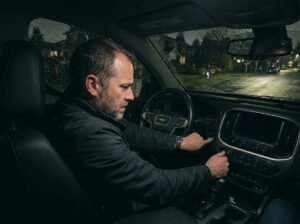
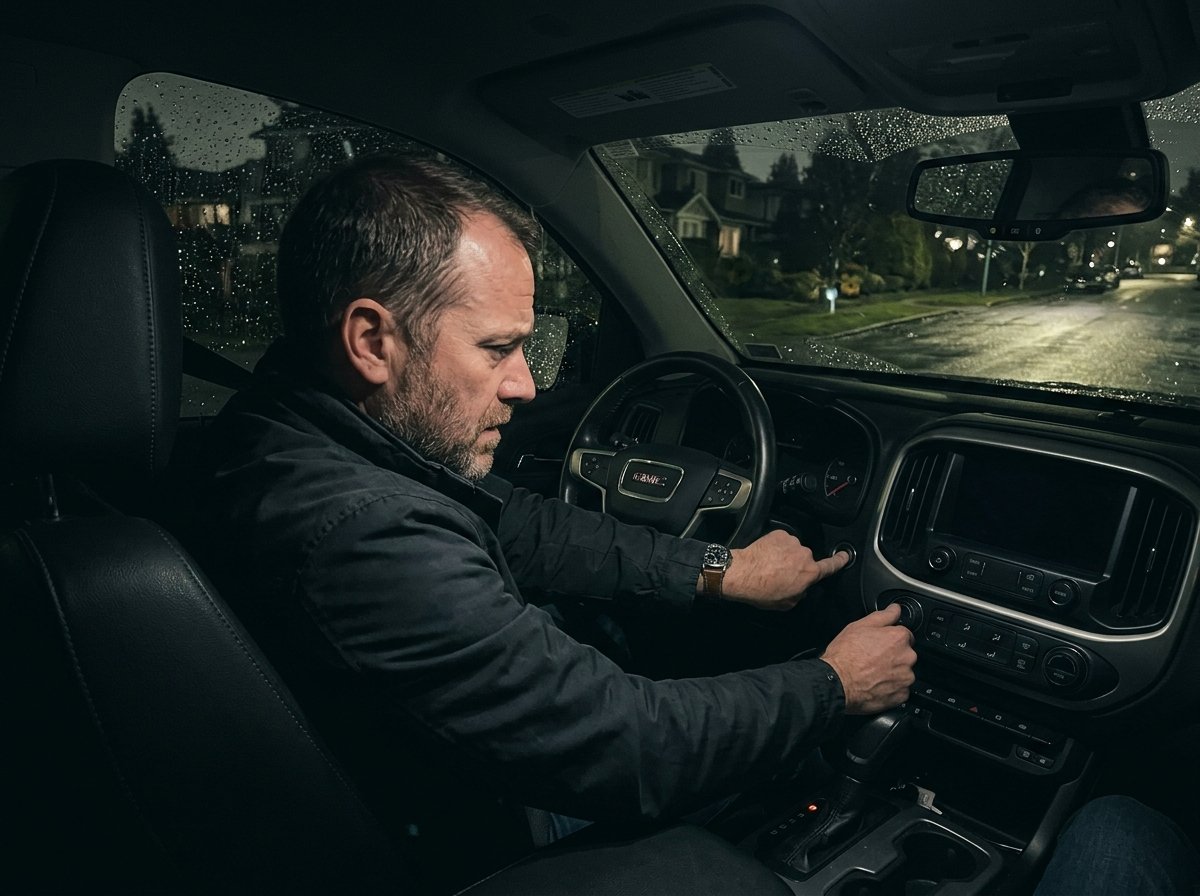
- The car may not shift into neutral or roll freely.
- Extra labour or special equipment may change the quote.
In this guide
- Share the clearance sign, vehicle type, and exact stall before dispatch.
- Ask for the fee breakdown before the truck is sent.
Simple version: confirm these four cost areas first.
- Base or callout charge.
- Parkade-access or special-equipment charge.
- Hookup, recovery, or extra-labour charge.
- Distance, waiting-time, or destination charge.
TL;DR: Confirm the full tow quote before dispatch
- Send the parkade clearance, stall location, and vehicle details.
- Ask which of the four fee types apply to your job.
- Get the expected total or pricing method in writing when possible.
Why underground garage towing can cost more
The tow may need a lower-profile truck, dollies, extra positioning, or more time to reach the vehicle. Check the Vancouver parkade clearance guide before booking so dispatch has the right access details.
Context (what matters in this situation):
- Low ceilings can limit which truck can enter.
- Sharp corners can make loading and turning harder.
- A locked steering wheel or dead battery can change the recovery plan.
- A blocked stall can require more setup time.
What dispatch should confirm before sending the truck
Start with the entrance height, the vehicle condition, and how far the car must be moved. If the car can reach street level, flatbed towing in Vancouver may be one option after the vehicle is safely brought out of the parkade.
What this usually looks like (real-world flow):
- You report the exact building and garage entrance.
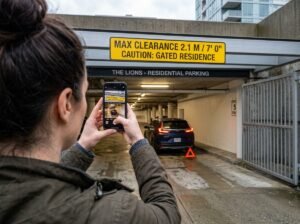
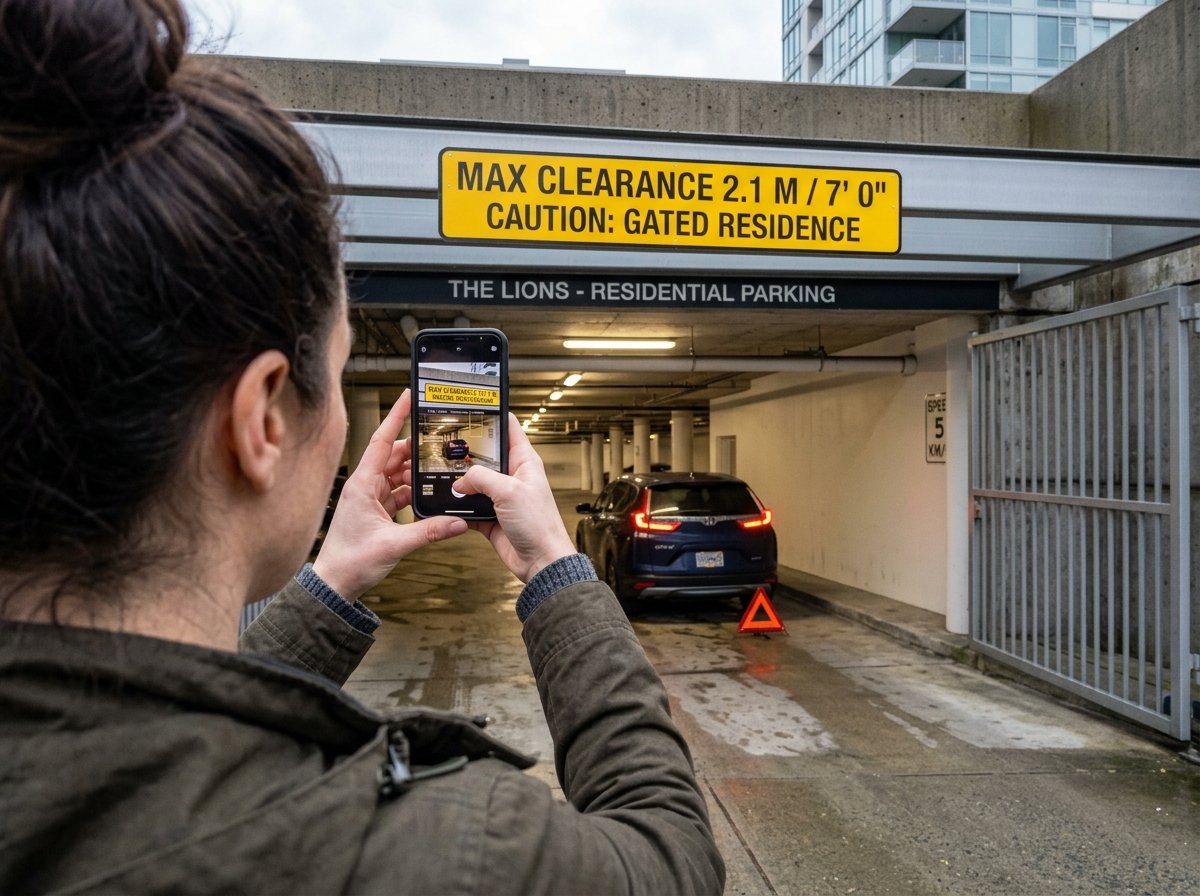
- You read the posted clearance height to dispatch.
- You explain whether the car rolls, steers, and shifts.
- Dispatch chooses the likely truck and recovery setup.
- You confirm the quote details before the driver heads out.
Details to confirm (so you get the right help fast):
- Vehicle year, make, model, and drivetrain.
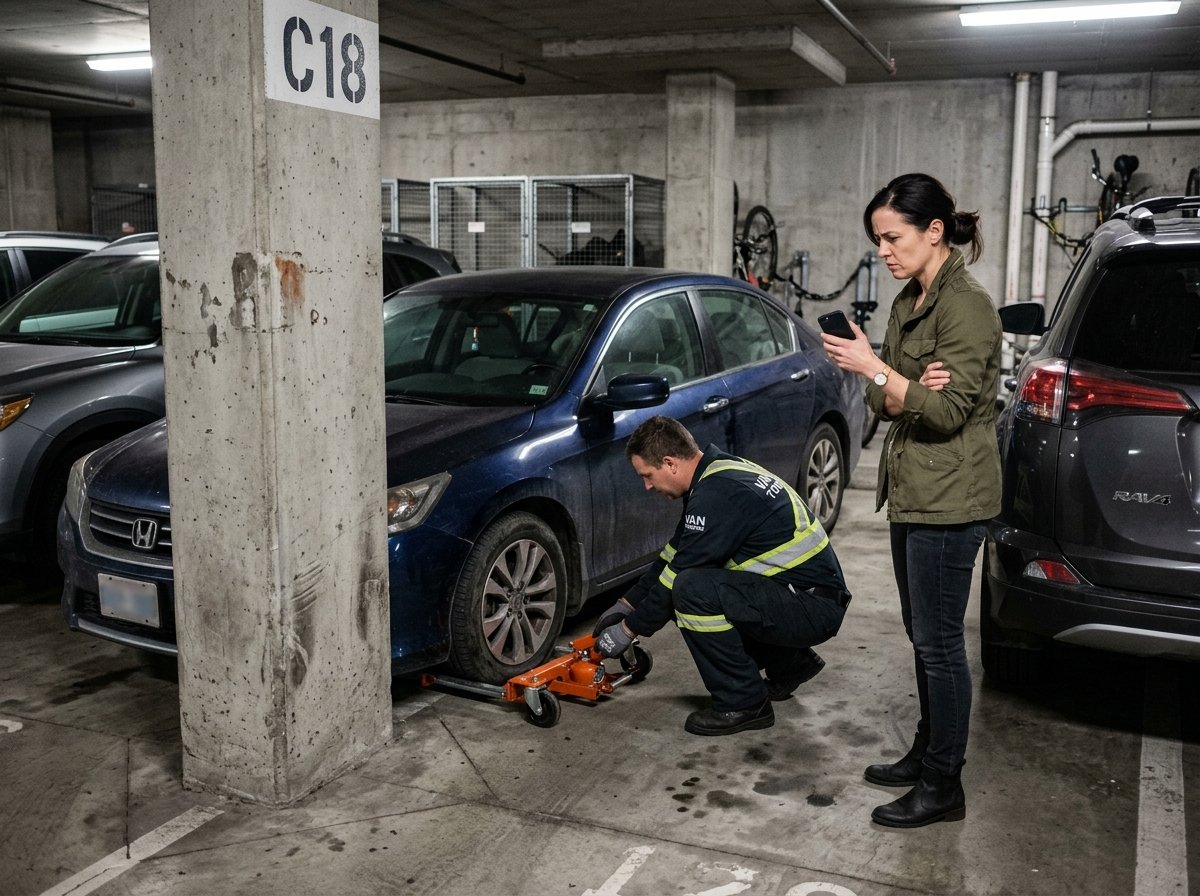
- Level, stall number, and nearest ramp.
- Destination address and any shop access limits.
What you should get as the outcome:
- Less chance of sending a truck that cannot enter.
- Fewer surprises about extra equipment.
- A clearer price before work starts.
Membership limits and hidden tow costs to check
If the car will not roll, tell dispatch before booking. The guide on towing a car that will not shift into neutral explains why that detail can affect the recovery method.
Limits / constraints (what can slow things down):
- Check whether a roadside plan caps tow distance.
- Ask whether special recovery equipment is covered.
- Confirm whether your plan limits the destination.
- Ask what receipt details you need for reimbursement.
Hidden costs to watch for:
- Extra waiting if access is blocked.
- Extra labour for a vehicle that will not roll.
- Special equipment for tight or low-clearance access.
- Added distance if the repair shop is farther away.
What to do before you approve the tow
Give dispatch the same facts the driver will need on arrival. For many passenger cars, light-duty towing in Vancouver may apply, but tight underground access can require a different setup.
- Ask which fees are fixed and which can change after arrival.
- Ask what happens if the truck cannot fit the entrance.
Our recommendations before an Olympic Village parkade tow
Photograph the clearance sign at the garage entrance.
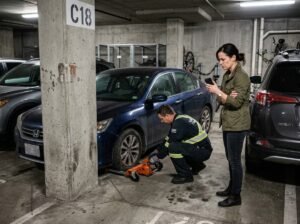
Send a photo showing the car and space around it.
Tell dispatch if the wheels are turned or locked.
Confirm whether the vehicle starts or powers on.
Ask for the four fee areas before dispatch.
Keep the building contact ready if the driver needs gate access.
5 safety steps before the tow starts
Do not try to pull a disabled car up a ramp with another passenger vehicle. If the car cannot roll safely, dolly towing in Vancouver may be part of the solution when the setup fits the vehicle and garage.
A good option is:
- Keep people clear of the car and tow path.
- Do not stand between the disabled car and another vehicle.
- Unlock the vehicle only when the driver asks.
- Tell the driver about leaks, damaged wheels, or broken steering.
- Follow the driver’s instructions during loading and movement.
Scenario 1: Your EV is disabled in a low-clearance stall
EVs can have specific loading points and drivetrain rules. If the vehicle is a Tesla, review Tesla towing in Vancouver and give dispatch the model, battery state, and whether the vehicle can enter tow mode.
Do this:
- Send the exact clearance height.
- State whether the vehicle can power on.
- Confirm the recovery and loading method before movement.
Scenario 2: A motorcycle is stuck below street level
A motorcycle needs secure loading and tie-down points, not the same setup as a car. Ask about motorcycle towing in Vancouver and describe the ramp, gate, and space around the bike.
We recommend this:
- Keep the bike upright only if it is safe to do so.
- Tell dispatch if the steering is locked.
- Confirm where the bike will be delivered.
Scenario 3: The repair shop is far from Olympic Village
The destination can affect the total because travel distance is part of the job. If the shop is outside the local area, compare the plan with long-distance hauling in Vancouver before approving the tow.
Here’s a simple path forward:
- Give the full destination address.
- Ask how distance is priced.
- Confirm whether the shop can receive the vehicle.
Suggested plan:
Step 1: Send the job details before booking
Read the full underground garage towing guide, then send the entrance height, vehicle details, stall location, and destination.
Step 2: Share the exact parkade entrance
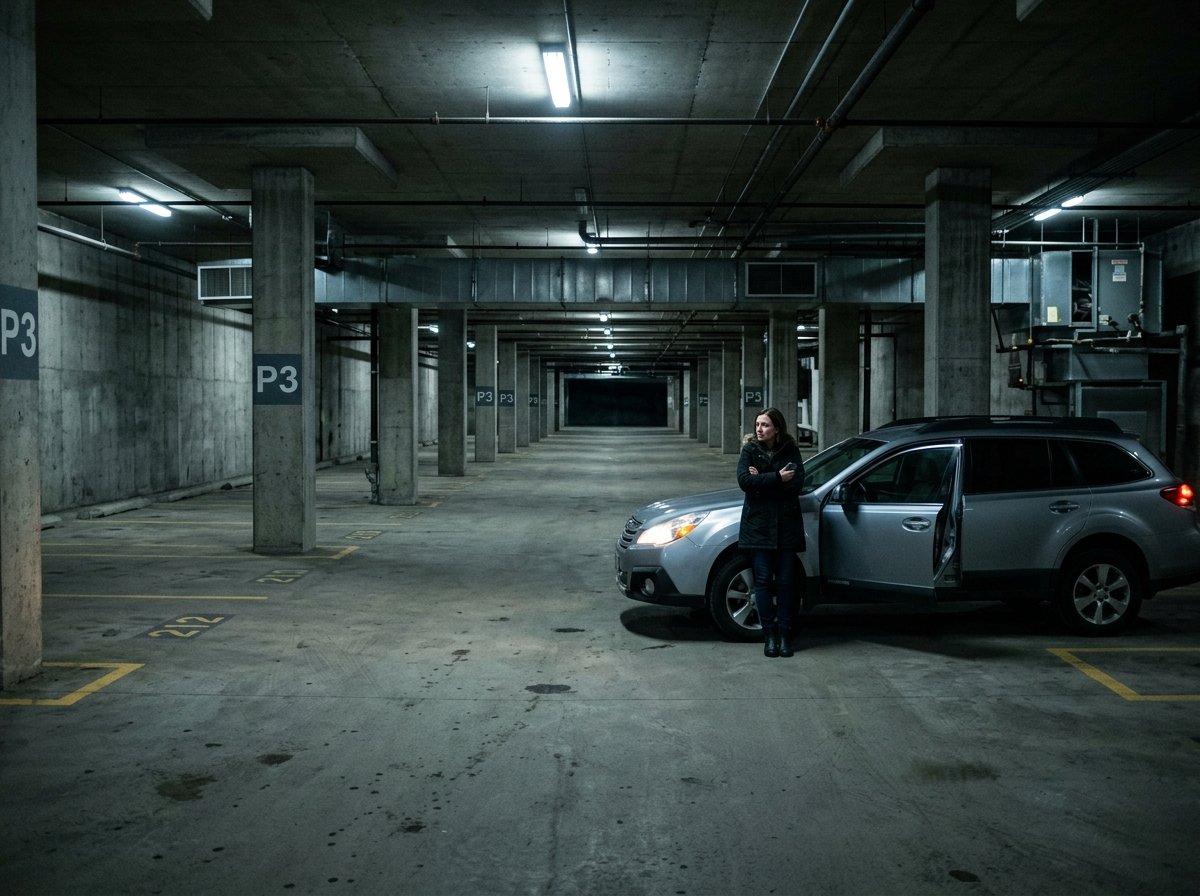
Send a map pin for the correct entrance, plus a photo of the clearance sign and gate. Mention the P-level and stall number so the driver does not lose time at the wrong entrance.
Step 3: Confirm the towing setup
Ask what equipment the driver expects to use and why. If the vehicle is a larger pickup or van, truck towing in Vancouver may need to be considered before dispatch.
City of Vancouver impounded vehicles and towing fees
The City of Vancouver towing and impound guide explains where city-towed vehicles may go and notes what to do if a vehicle was towed from a commercial parking lot or garage. Use it to separate an impound situation from a tow you book yourself. For a voluntary underground tow, ask for a job-specific quote before dispatch.
Frequently asked questions about Olympic Village underground towing
What four fees should I confirm before an underground garage tow?
Ask about the base or callout charge, parkade-access or special-equipment charge, hookup or recovery labour, and distance or waiting-time charges. Ask which ones apply before dispatch.
Does underground parkade access always cost extra?
Not always. The cost depends on the garage, the truck that can fit, the vehicle condition, and the work needed to move it safely.
What if my car will not shift into neutral?
Tell dispatch before the truck is sent. A vehicle that cannot roll may need dollies, wheel handling, or another recovery method.
Can a flatbed enter an Olympic Village underground garage?
It depends on the posted clearance, ramp angle, turning space, and truck height. Send a photo of the clearance sign so dispatch can choose the right setup.
What if my pickup or van is too large for normal light-duty towing?
Give dispatch the exact vehicle size and weight details. Some vehicles may need heavy-duty towing in Vancouver or another setup, so this should be checked before the truck is assigned.
What should I send dispatch before the driver arrives?
Send the entrance address, clearance sign, P-level, stall number, vehicle year and model, and destination. Also say whether the car starts, steers, rolls, and shifts into neutral.