An AWD breakdown can turn costly fast if the wrong truck shows up first. Ask Expressway Towing which wheels will stay off the ground, whether dollies are needed, and whether the driver can give a real ETA before dispatch.
Quick overview
- A wrong tow setup can stress AWD parts.
- Low parkade height can block a full flatbed.
- Wheel or suspension damage changes the loading plan.
- Downtown traffic can delay a truck swap.
In this guide
- You can ask what truck type is being sent.
- You can ask what could change the final bill.
Simple version:
- Say AWD first when you call.
- Ask if all driven wheels stay off the road.
- Tell dispatch if you are in a parkade.
- When in doubt, ask for the safer truck.
TL;DR
- Flatbeds fully lift the vehicle, so they are often the safer pick for AWD.
- Wheel lifts can work in some cases, but only if the loading method fits your exact vehicle.
- Dispatch needs your make, model, damage, and exact location before choosing.
What changes the call between a flatbed and a wheel lift?
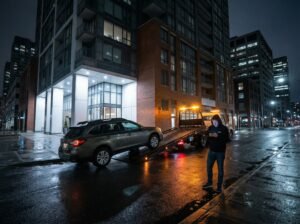
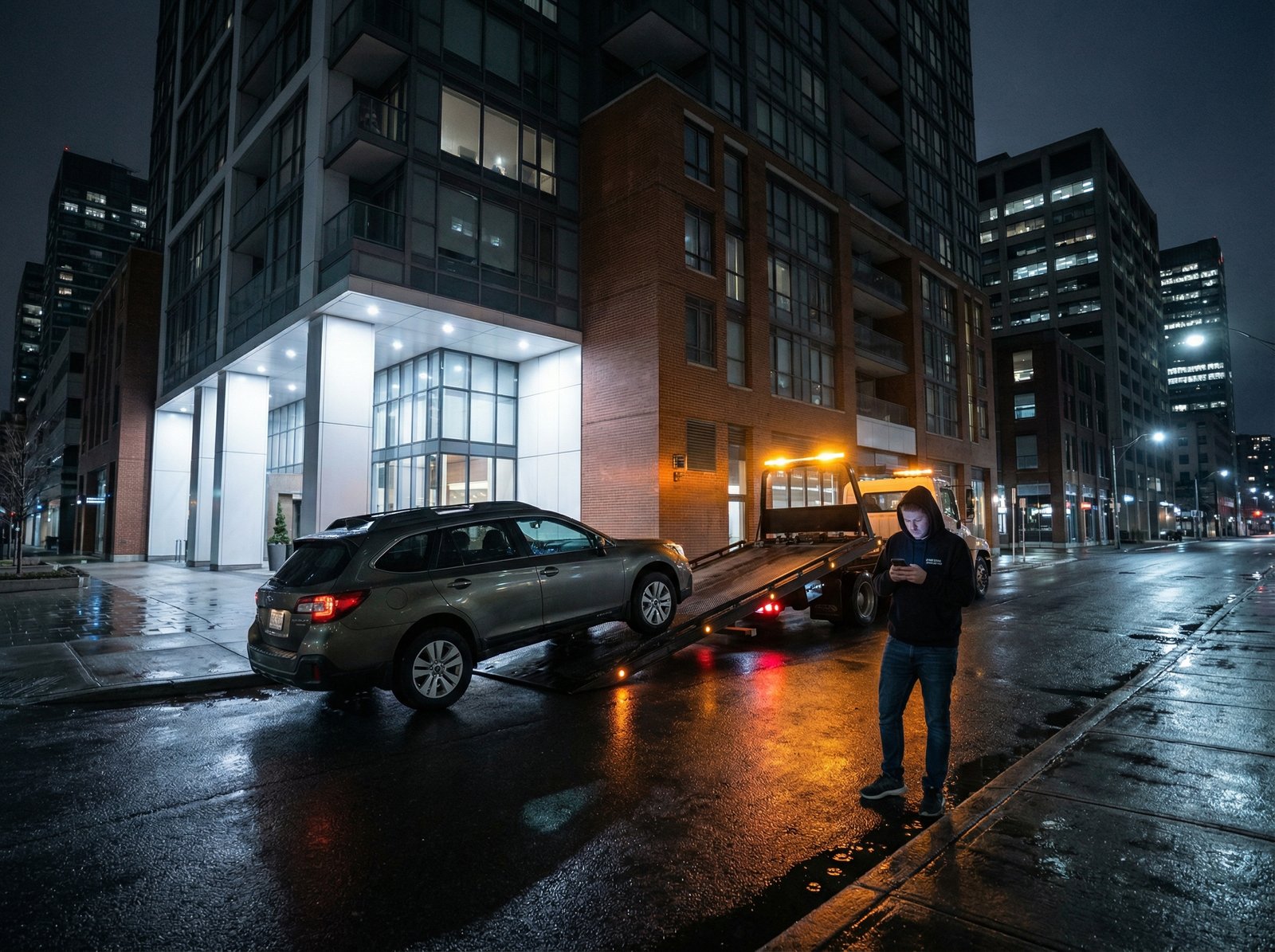
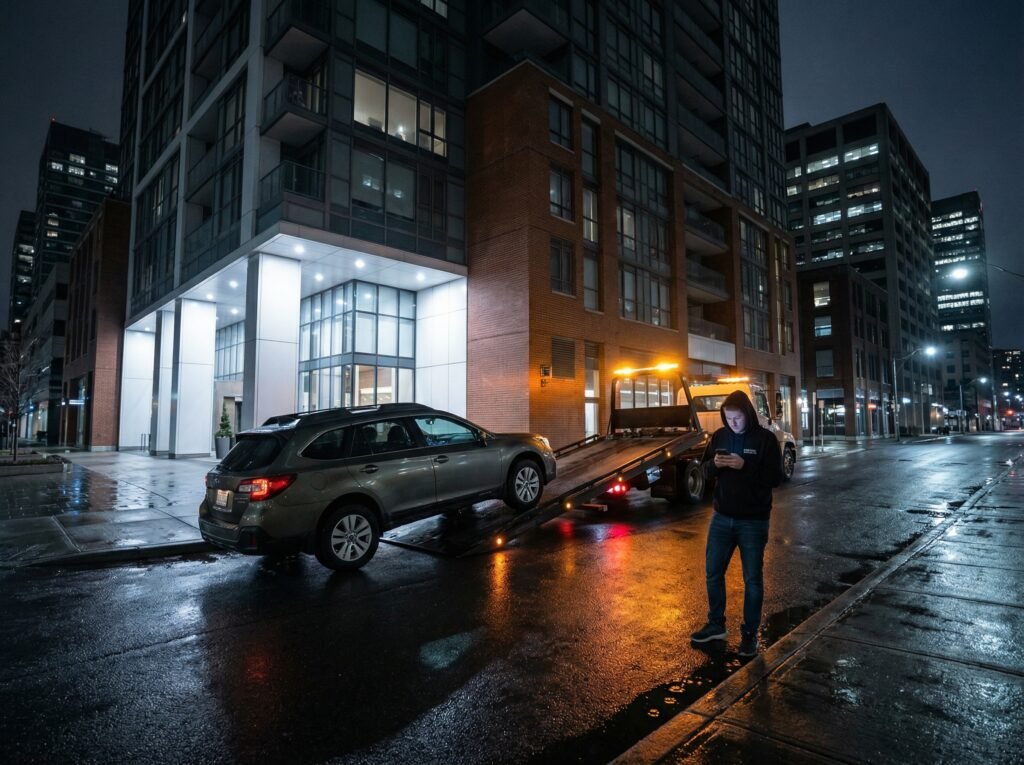
A flatbed keeps the whole vehicle off the road, which is why many drivers start with flatbed towing services. A wheel lift raises one end, so dispatch must know if your AWD system, tire size, parking spot, or damage makes that risky. When the answer is not clear, ask them to check the towing procedure for your exact vehicle.
Context (what matters in this situation):
- Not all AWD systems behave the same.
- Locked wheels can stop fast loading.
- Curb hits can change tire angle and clearance.
- A safe tow can cost less than a bad tow.
What dispatch should ask before the truck leaves
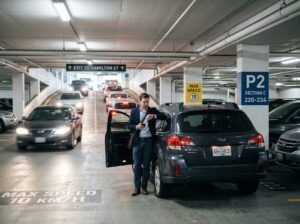
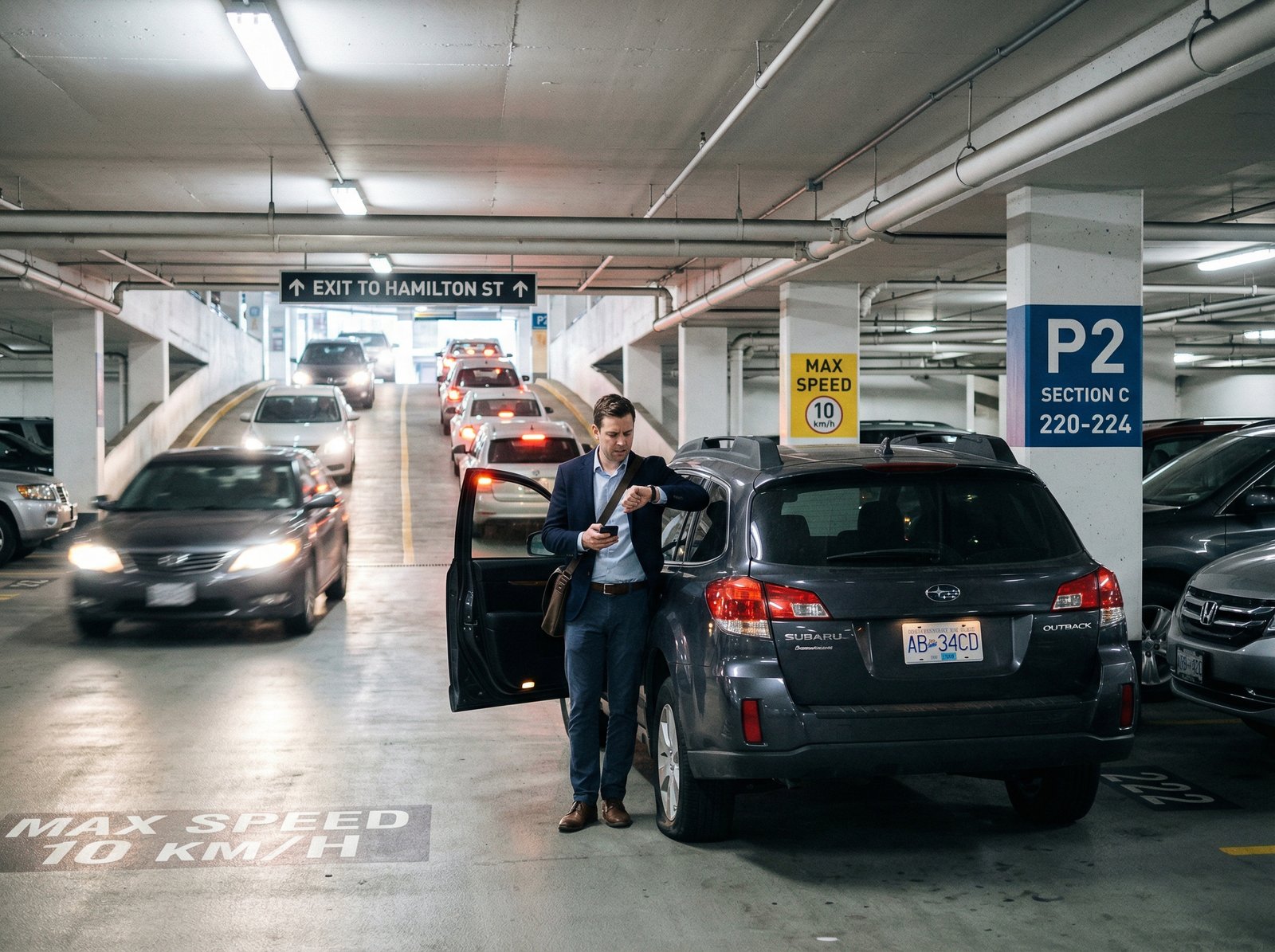
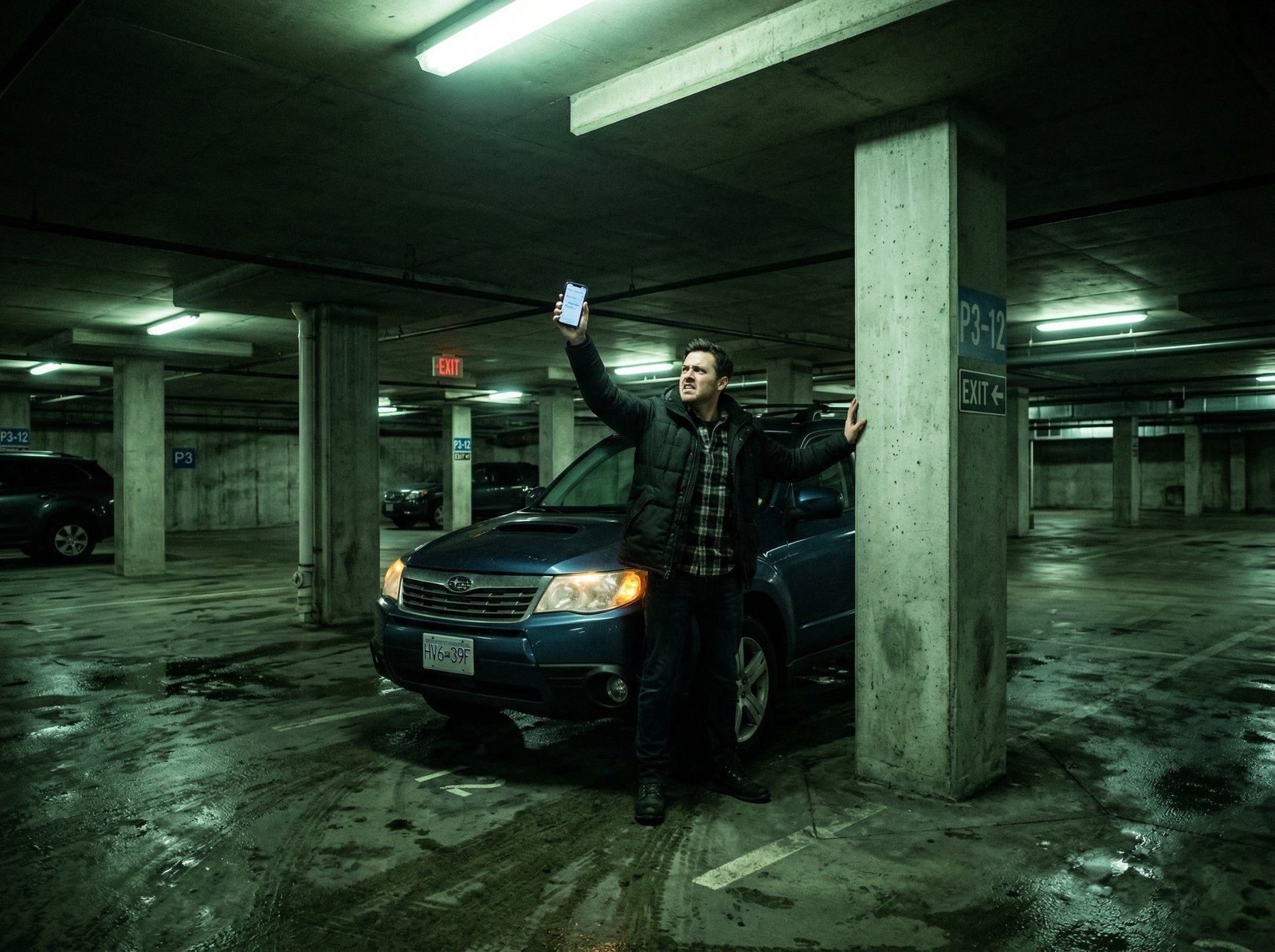
Start with the hard part: can the truck reach you? In a tight garage or lane, underground towing services may be needed, and drivers stuck below grade often ask the same questions covered in this parkade towing guide.
What this usually looks like (real-world flow):
- Give the make, model, and year.
- Say AWD, 4WD, EV, or hybrid right away.
- Share the exact block, lane, or parkade level.
- Explain if a wheel is flat, bent, or locked.
- Say where you want the vehicle taken.
Details to confirm (so you get the right help fast):
- Tell them if the car rolls in neutral.
- Give height limits and tight turn notes.
- Mention warning lights or crash damage.
What you should get as the outcome:
- Fewer truck swaps.
- Less wait time.
- A safer first load.
Where plans and pricing can trip you up
Before you approve the job, ask what changes the final price. The same downtown access issues in this downtown towing fee guide can also change whether a wheel lift, dollies, or a flatbed gets sent.
Limits / constraints (what can slow things down):
- Some roadside plans cap tow distance.
- Some plans cap how many service calls you get.
- Tight access work may not be included.
- Special vehicles may need a different truck.
Hidden costs to watch for:
- Dollies or extra gear.
- Extra labour for a locked wheel.
- Parkade access delays.
- A second truck if the first one cannot load.
What to do now if you are stuck
If the car is blocking traffic but still rolls, a nearby light duty towing service may solve it fast. If the car is damaged, locked, or the AWD setup is unclear, ask dispatch to slow down and match the safer truck before loading.
- Say AWD before the address.
- Ask if all wheels stay off the road.
Our recommendations
Lead with drivetrain risk, not just price.
Ask whether a dolly towing service will be used if a flatbed cannot fit.
If the car is an EV or premium AWD, say that first.
Give parkade height and stall details before dispatch.
Ask for the load plan, not only the ETA.
Keep photos of tire and wheel damage.
Stay safe while you wait
If you drive an EV or advanced AWD, ask whether the crew also handles Tesla towing services so the loading method matches the vehicle.
A good option is:
- Move to a safer spot only if the car still rolls and it is legal to do so.
- Turn on hazard lights.
- Stay out of live traffic lanes.
- Keep children and pets away from the curb side.
- Take clear photos before loading starts.
Scenario 1: AWD car stuck in a parkade
If height bars block a flatbed, the job may start with underground towing services to bring the car to street level, then switch to a flatbed. Ask if the team plans one truck or two so you know the timing and price before the hook-up.
Do this:
- Give the clearance height.
- Share the level and stall number.
- Ask where the handoff to a flatbed happens.
Scenario 2: AWD with wheel or suspension damage
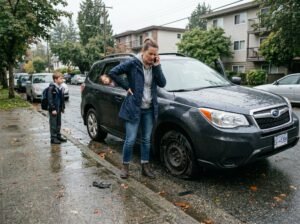
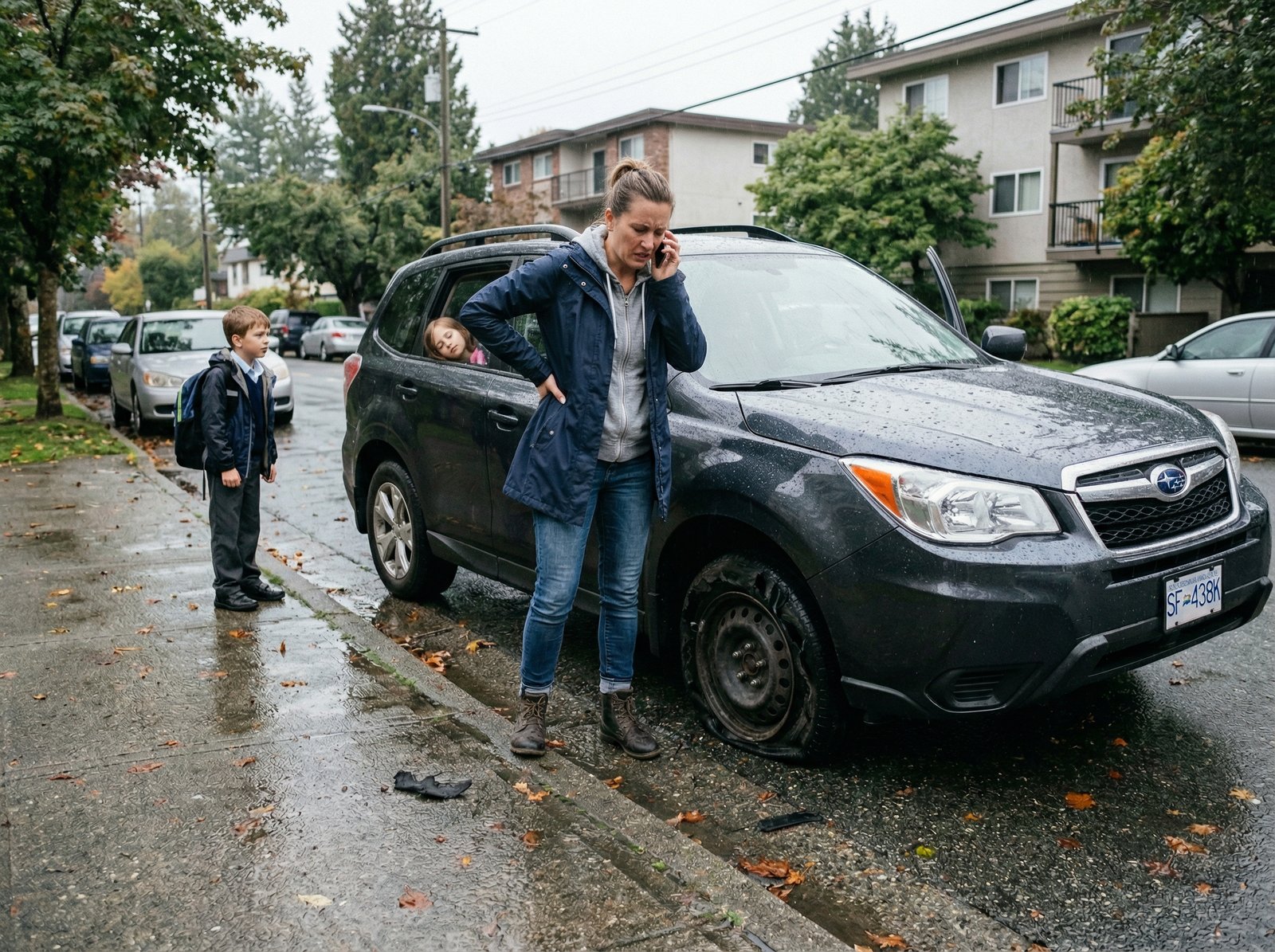
If a wheel is bent, locked, or pushed into the fender, loading gets harder. In some cases the operator may need more reach and control than a basic wheel lift, similar to how larger jobs use truck towing services for added stability.
We recommend this:
- Say which corner is damaged.
- Tell dispatch if the steering is locked.
- Ask if extra gear is needed to load safely.
Scenario 3: Long tow out of downtown
For a longer move, ask if the vehicle will stay on one truck from pickup to drop-off. A dedicated long distance hauling service can reduce unload and reload steps that add risk for an AWD drivetrain.
Here’s a simple path forward:
- Confirm the drop-off address.
- Ask if there will be any truck change.
- Get the final quote before approval.
Suggested plan:
Step 1: Book the right truck
Tell dispatch the car is AWD, where it is parked, and what damage you can see. Most cars need a standard tow, but oversize SUVs or loaded work rigs may need heavy duty towing services instead.
Step 2: Share the exact pickup spot
Use the block number, closest landmark, parkade level, stall, and height bar. The same precise pickup details used for motorcycle towing services help here too: lane, landmark, and the safest side to load from.
Step 3: Choose the safest fit
If the vehicle is tall, loaded, or stuck on awkward ground, a larger setup like equipment towing services or RV towing services may be safer than forcing a small truck to do the job.
ICBC roadside expense help
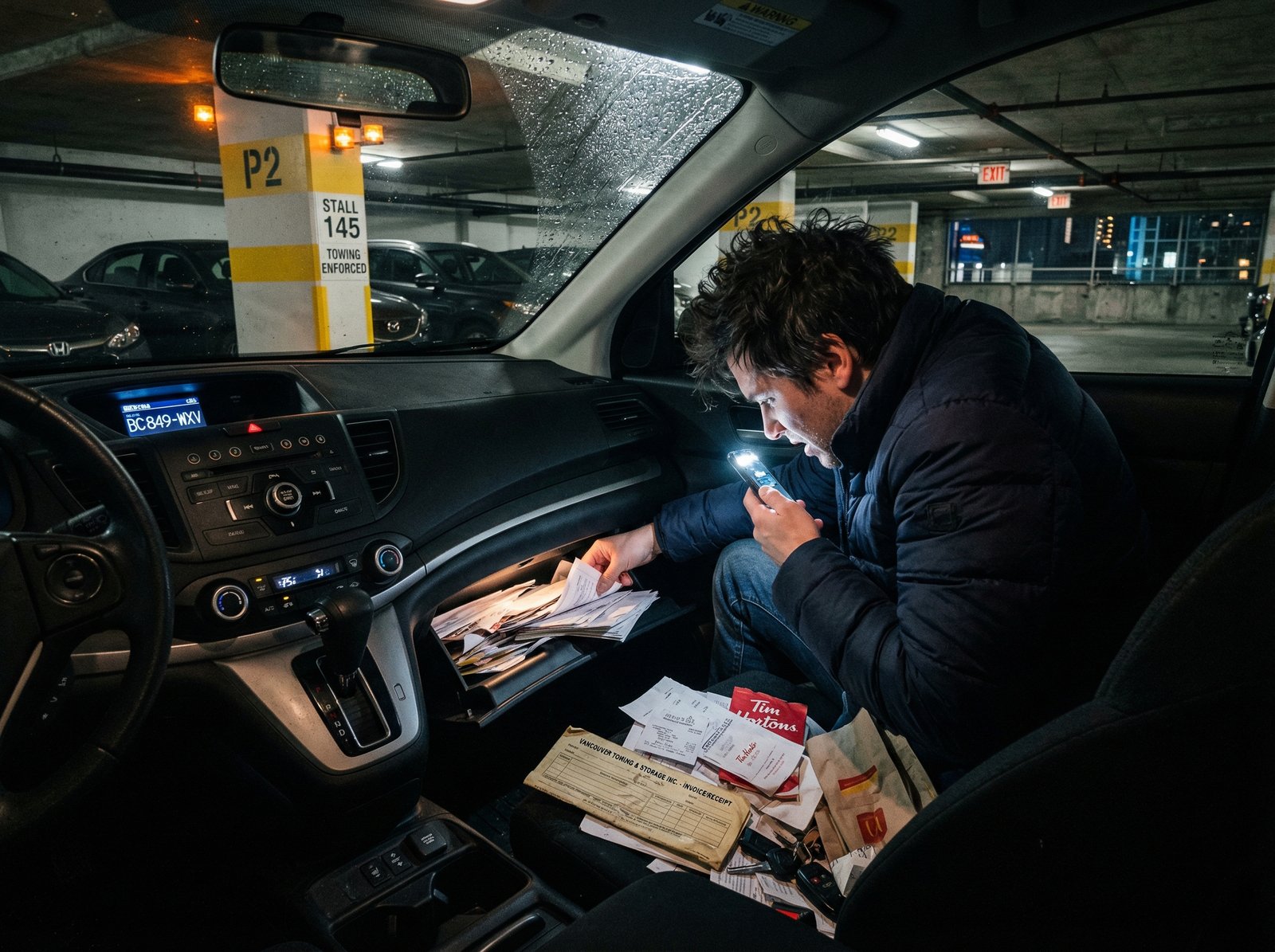
If your breakdown later becomes part of a claim, ICBC’s emergency roadside expenses page shows when receipts and service details matter. It can help you keep the tow invoice, date, and provider details in one place. Read it before you throw away paperwork after the car is moved.
AWD towing FAQ
Does every AWD car need a flatbed?
Not always, but many do. The safe answer depends on the exact AWD system, wheel condition, and what the owner’s manual allows. If the plan is not clear, ask dispatch to choose the lower-risk option.
What should I say first on the phone?
Start with AWD, then give the make, model, year, and exact spot. After that, say if the car rolls, if a wheel is damaged, and if you are in a parkade. Those details help dispatch send the right truck first.
Is a wheel lift cheaper than a flatbed?
Sometimes the first quote is lower. But if the truck cannot load the car safely, a swap, extra gear, or a second dispatch can cost more than sending the right truck first. Ask for the full loading plan, not just the lowest price.
Can I stay inside the car while it is loaded?
Usually no. The operator needs clear space to hook up, align, and load the vehicle safely. Follow the driver’s instructions and stand in a safe spot away from traffic.
What if the car is parked nose-in against a wall?
Tell dispatch before the truck leaves. Tight angle, low clearance, or blocked wheel access can change the truck choice and the way the car gets pulled out. A few photos can help if the position is hard to explain.
Should I ask about dollies for AWD?
Yes. If a full flatbed cannot fit, dollies may be part of the safe loading plan. Ask whether they are included, whether all driven wheels will stay off the road, and whether the quote changes if extra gear is needed.